
































Key Takeaways
- Cooling is rated at 95°F outside. Past that, efficiency slips by roughly 1% to 2% for every added degree.
- On very hot days, most systems can only pull the indoor air to about 20°F below the outdoor temperature, so a 72°F setting can stay out of reach at 100°F. That is normal.
- In cooling mode, the lowest outside temperature to run an AC is around 60°F. Below that, you risk compressor and coil damage.
- A heat pump keeps running in the cold, but efficiency drops as the air gets colder. Standard models reach for backup heat sooner than cold-climate ones.
- Smart control adjusts your settings to the real outdoor temperature on its own, so the system reacts without you touching anything.
Yes. The temperature outside has a direct effect on AC efficiency and on how low the system can pull the air indoors. Hot outdoor air makes the unit work harder and draw more power. Cold outdoor air changes what the system can safely do, and it affects heat pumps differently from cooling-only units.
In this article, we'll cover how heat cuts performance, what happens as temperatures fall, the exact numbers for each limit, and the steps that keep your system working when conditions get extreme.
All You Need to Know About Outside Temperature and Your AC
What Extreme Heat Does to Your AC's Efficiency
Your air conditioner moves heat out of your home and releases it into the air outside. When that outdoor air is already hot, there is less room to dump the heat the unit collects, so it runs longer and draws more power for the same result. The hotter it gets, the bigger the heat load the system has to clear.
Manufacturers rate cooling at 95°F outside, with 80°F indoors. Above that point, AC efficiency drops as the air gets hotter. Field measurements of residential split systems found that a move from 95°F to 105°F cut real-world efficiency by about 10%, close to 1% for every degree Fahrenheit. So on a 105°F afternoon, the same unit that felt strong in spring works noticeably harder to hold one steady room temperature.
Why Your AC Can't Reach the Set Temperature When It's 100°F and Up
Most residential systems are built to bring indoor air to roughly 20°F below the outdoor temperature. At 95°F outside, a 75°F room is realistic. At 105°F, holding 78°F to 80°F may be the honest limit, and 72°F will not happen no matter how long the unit runs.
A system that never shuts off on the hottest days is usually behaving as designed, not failing.
If yours runs flat out and still drifts warm, our guide on why your AC is running but not cooling in hot weather walks through what to check.
What Helps When the Heat Pushes Your AC to Its Limit
The most useful change on a peak day is setting a target the unit can actually reach, which stops it from running against a goal it has no way to hit.
For more ways to get extra cooling out of the system, see our tips to make your air conditioner work better in extreme heat.
What Is the Lowest Outside Temperature to Run an AC?

In cooling mode, the lowest outside temperature to run an AC is around 60°F. Most manufacturers set 60°F as the floor because colder air thickens the compressor oil and can freeze the indoor coil, and both shorten the unit's life. Active cooling is rarely needed at those temperatures anyway.
We cover the minimum outside temperature for an air conditioner and how to protect the unit through a cold spell in a separate guide.
Heating mode works on a different limit. A heat pump running in reverse to warm your home has its own lower boundary, and that boundary is higher than the cooling-mode floor.
How Does Cold Weather Affect a Heat Pump?
A standard air conditioner does not cool in winter, so cold outdoor air causes it no trouble beyond the startup limits above. A heat pump is a different case. It runs the same refrigerant cycle backwards, using a reversing valve to pull heat out of outdoor air and move it inside. Cold air still holds usable heat, but the colder it gets, the less heat is there to collect and the harder the unit works to find it.
An air-source heat pump can deliver up to three times more heat energy than the electricity it uses, and that ratio shrinks as the temperature drops.
Efficiency here is tracked with COP, the coefficient of performance, which is the heat delivered for each unit of electricity used. COP stays high in mild cold and declines steadily as the air gets colder.
At What Temperature Does a Heat Pump Stop Working?
A heat pump does not switch off at a clean cutoff. The temperature at which it stops working efficiently is a range, because output tapers off gradually. Standard air-source units lose a real share of their capacity around 25°F to 35°F and start leaning on backup electric heat.
Cold-climate models hold useful output much lower, down to roughly -13°F, and some keep running past -20°F. Below about -25°F, most units reach the point where backup resistance heat does the job more cheaply.
The heat pump temperature range worth watching lines up with the three rated test points the industry uses: 47°F, 17°F, and 5°F.
The table shows typical performance for a cold-climate model across that span.
|
Outdoor temperature |
Typical COP (cold-climate heat pump) |
What it means |
|
47°F |
3.5 to 4.0 |
About 3.5 to 4 units of heat for each unit of electricity |
|
17°F |
2.5 to 3.0 |
Still running efficiently |
|
5°F |
1.75 to 2.5 |
Efficiency dropping, still more efficient than electric resistance heat |
|
-13°F |
1.3 to 1.7 |
Cold-climate units only, output reduced |
Figures are typical for cold-climate models and vary by unit. Energy Star's cold-climate certification requires a COP of at least 1.75 at 5°F. Standard units fall off faster and reach their backup-heat point sooner.
How to Match Your AC to the Weather Outside
The same system can run well across a wide span of conditions once you adjust how it operates at each end.
Before a Heat Wave
- Clean or replace the filter so airflow is not already choked when demand climbs.
- Clear leaves, grass, and debris from the outdoor unit, and leave at least two feet of open space around it.
- Pre-cool the house in the morning while it is still mild outside, so the system is not starting from a deficit through the hottest hours.
During Extreme Heat
Set the thermostat to a target the unit can hold, then leave it alone. Constant adjustments and very low settings keep the system running without reaching the goal.
Close blinds on sun-facing windows, and run ceiling fans so a higher thermostat setting still feels comfortable.
In the Cold (Heat Pumps)
- Keep snow and ice off the outdoor unit and clear the space around it, since blocked airflow forces more frequent defrost cycles.
- Avoid dropping the overnight setting far below your daytime one, because recovering a large gap pulls in backup electric heat, and that costs more than steady running.
Handling all of this by hand means watching the forecast and changing settings before every shift in the weather.
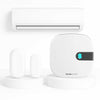
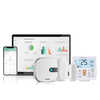
Our Climate React feature does that part for you. You set the conditions you want, a room temperature or a humidity level, and the controller acts the moment its sensors read past them, turning the AC on, easing it off, or moving the setpoint without anyone opening the app.
Through a heat wave, it holds the realistic target set earlier, and in a cold snap it brings a heat pump up before the room falls too far. Because it responds to live conditions, the settings follow the real temperature outside and in. All of it runs on the Sensibo Air Pro, a smart AC controller that adjusts to outdoor temperature automatically.
FAQ
What is the lowest outside temperature to run an air conditioner?
Around 60°F in cooling mode. Most manufacturers set 60°F as the minimum, and running colder than that risks damaging the unit. If you want air movement on a cooler day, switch to fan-only mode instead of cooling.
Does extreme heat reduce AC efficiency?
Yes. Cooling is rated at 95°F outside, and above that each degree cuts efficiency by roughly 1% to 2%. At 105°F to 110°F, the same unit draws more power and runs longer to hold a steady indoor temperature than it does on a mild day.
Why can't my AC cool the house when it's over 100°F outside?
The unit can only move so much heat at once. When it is over 100°F, the heat coming into your home can match what the AC removes, so the indoor temperature settles higher than your setting. A system that runs nonstop on those days is working as designed, not breaking.
At what temperature does a heat pump stop working efficiently?
Standard air-source models start losing real capacity around 25°F to 35°F and switch to backup heat. Cold-climate units stay efficient across a wider temperature range, holding a usable COP down to roughly 5°F and running past -13°F. Below about -25°F, backup resistance heat becomes the cheaper option.
Can I run my AC in 40°F weather?
Not in cooling mode. 40°F is well under the 60°F floor for a standard AC, and running it there risks compressor and coil damage. A heat pump can run at 40°F in heating mode to warm the house, which is what it is built to do at that temperature.
What happens to my AC if I run it when it's too cold outside?
Cold air thickens the compressor oil and can send liquid refrigerant back to the compressor, which damages it. The indoor coil can also ice over and block airflow. A short test does little harm, but repeated cold-weather cooling shortens the system's life.