
































A heat pump is an HVAC system that heats and cools a building by moving heat from one place to another instead of burning fuel to generate it. During cold months, it pulls heat energy from outdoor air, ground, or water and transfers it inside. During warm months, the cycle reverses and the system removes heat from the home, releasing it outdoors. This makes a heat pump both a heater and an air conditioner in a single unit.
How a Heat Pump Works
The system runs on a refrigerant cycle. Liquid refrigerant absorbs heat at one coil (the evaporator), turns into gas, gets compressed to raise its temperature, then releases that heat at the second coil (the condenser). A component called a reversing valve flips the direction of this cycle depending on the season, so the same hardware handles both heating and cooling.
Because the system moves existing heat rather than creating it from scratch, a heat pump can deliver two to three times more heating energy than the electricity it consumes. The U.S. Department of Energy estimates that air-source heat pumps can cut electricity use for heating by about 50% compared to electric resistance systems like baseboard heaters. Standard air conditioners that include a heat mode work on the same reversing principle, though dedicated heat pumps are optimized for sustained heating performance at lower outdoor temperatures.
Types of Heat Pumps
Type |
Heat Source |
Best Suited For |
Air-source (ducted) |
Outdoor air |
Homes with existing ductwork, moderate to cold climates |
Ductless mini-split |
Outdoor air |
Homes without ductwork, room-by-room control |
Window heat pump |
Outdoor air |
Single-room cooling and heating without permanent installation |
Geothermal (ground-source) |
Underground loops |
Homes with land for buried piping, extreme climates |
Water-source |
Wells, lakes, or closed water loops |
Properties near a natural water body |
Dual-fuel / Hybrid |
Air + gas furnace backup |
Regions with prolonged sub-zero winters |
Air-source models are the most widely installed residential option. Ductless mini-split versions skip traditional ductwork and allow room-by-room temperature control. Window heat pumps fit inside a standard window opening and provide both heating and cooling for a single room, making them a practical option for renters or small spaces where a permanent installation is not feasible.
Adding Smart Control to a Heat Pump
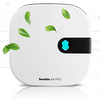
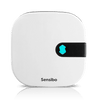
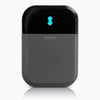
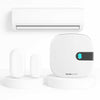
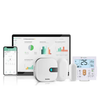
Most ductless and window-mounted heat pumps ship with a basic infrared remote and no built-in scheduling, automation, or energy tracking. A smart controller adds WiFi connectivity, app-based scheduling, geofencing, and usage monitoring without replacing the unit itself. This applies to any IR-controlled heat pump, regardless of brand or age. See How to Make Your AC Smart for the full walkthrough.