




































Removing cigarette smell takes anywhere from 15 minutes to several days. A room someone smoked in once clears in about 20 minutes of focused ventilation. A guest room with lingering odor from a weekend visitor usually needs a few hours of active treatment. A home a smoker lived in for years is a project measured in days, and sometimes a full weekend of scrubbing before the smell is gone for good.
Two things decide where you land in that range. The first is how deep the contamination runs: fresh smoke in the air clears fast, while residue soaked into fabric, carpet, and drywall needs physical removal and resists any shortcut. The second is matching the method to the job, since the trick that freshens a room before guests arrive does almost nothing for smoke that has set into the walls.
All You Need to Know About Removing Cigarette Smell From a Room
How Long Does It Take to Remove Cigarette Smell?
The table below sorts every method by speed, what it handles, and where it falls short, so you can jump to the one that fits your situation.
|
Method |
Time Needed |
Best For |
Limitations |
|
Cross-ventilation with fans |
15–20 min |
Fresh smoke, light contamination |
Weather-dependent, doesn't remove embedded odors |
|
Boiling citrus/spices |
15–20 min |
Quick refresh before guests |
Temporary, masks more than removes |
|
Vinegar spray on fabrics |
10–15 min |
Surface odors on upholstery |
Won't reach deep fiber contamination |
|
Baking soda on surfaces |
2–4 hours |
Carpets, rugs, fabric furniture |
Requires thorough vacuuming after |
|
Vinegar bowls |
2–4 hours |
Airborne odor neutralization |
Room smells like vinegar during treatment |
|
Air purifier (HEPA + carbon) |
1–2 hours ongoing |
Continuous particle and VOC removal |
Needs both filter types, ongoing filter cost |
|
Air quality monitor |
Continuous |
Confirming the smell is gone, by the numbers |
Measures only; removes nothing itself |
|
Activated charcoal |
2–7 days |
Stubborn embedded odors, enclosed spaces |
Slow-acting, needs periodic UV recharging |
|
Full fabric washing |
Half day |
Curtains, bedding, removable covers |
Can't wash everything; some items dry-clean only |
|
Wall and ceiling cleaning |
Full day |
Heavy tar residue, visible yellowing |
Labor-intensive, may need repainting after |
|
Professional ozone treatment |
24–48 hours |
Severe contamination, fire damage |
Expensive, requires vacating the space |
Why Does It Cling Like This?
The 7,000-plus chemicals in tobacco smoke create what researchers call thirdhand smoke, a residue that embeds into fabrics, drywall, and dust, then re-releases for months. That's why the guest room still reeks three weeks after your uncle's visit, and why airing it out alone rarely finishes the job.
Instant Fixes Under 30 Minutes

When you need to remove cigarette smell from a room fast, these methods deliver noticeable results before your next meeting, visitor, or video call.
Cross-Ventilation With Strategic Fan Placement
Opening a window helps a little. The bigger gain comes from how you move the air, and a single box fan placed right does most of the work.
In a room with windows on two sides:
- Set a box fan in one window facing outward, so it blows air out of the room.
- Open a window on the opposite side of the room or house to let fresh air rush in.
- Run it for 15 to 20 minutes.
The fan creates negative pressure that pulls smoky air outside instead of just diluting it, and the open window behind you feeds in clean air to replace it. The contaminated air leaves the room rather than drifting around in it.
Only one window to work with? The setup changes:
- Put the fan in the lower half of the window opening, still facing outward.
- Leave the gap above it open so fresh air can enter there.
- Run it for 15 to 20 minutes.
Warm, smoke-laden air rises, so venting low while fresh air enters high works with that movement instead of against it.
This clears a room fast because you're physically replacing the air volume instead of filtering or neutralizing it in place. A standard box fan moves 1,500 to 2,500 CFM (cubic feet per minute), enough to cycle a 12x12 room's entire air volume in under three minutes.
The Boiling Citrus and Spice Method
- Fill a pot with water and add sliced lemons or oranges.
- Drop in cinnamon sticks or whole cloves.
- Bring it to a simmer and keep it going for 15 to 20 minutes with good ventilation.
The steam carries aromatic compounds through the room while the moisture lifts smoke particles off surfaces temporarily.
This does more than mask: the acidic citrus vapor binds with some alkaline smoke compounds, so the space smells noticeably different by the time you're done.
Variations that work:
- Lemon and rosemary
- Orange peel and vanilla extract (add vanilla after removing from heat)
- Apple cider vinegar, two cups in the pot (harsh while it simmers, but it neutralizes well)
DIY Vinegar Spray for Fabrics and Surfaces
- Mix equal parts white vinegar and water in a spray bottle.
- For extra odor-fighting power, add 10 to 15 drops of eucalyptus or lemon essential oil.
- Lightly mist curtains, upholstery, and fabric surfaces until they're damp, not soaking.
The acetic acid neutralizes alkaline smoke residue on contact, and the vinegar smell dissipates within 10 to 15 minutes as it dries, taking much of the cigarette odor with it. The essential oil covers any leftover vinegar scent.
❗ For leather furniture or delicate fabrics, test an inconspicuous spot first.
The Dryer Sheet Hack for Quick Fabric Refresh
For a couch or chair you can't wash, dampen a few dryer sheets and rub them across the fabric. The surfactants bind to odor molecules while leaving a fresh scent behind.
For clothing that absorbed smoke at a party:
- Toss the items in the dryer with two or three dryer sheets.
- Run a no-heat tumble cycle for 10 minutes.
The tumbling shakes trapped particles loose while the sheets neutralize what remains.
Quick Fixes That Work in 1 to 4 Hours
These methods need more time to work but ask little effort once set up. Start them, handle other tasks, come back to a fresher room.

Baking Soda for Surface Odor
Baking soda neutralizes odors through a chemical reaction; it doesn't cover them. Smoke residue skews acidic, and baking soda's alkaline nature binds with those compounds.
To treat carpets, rugs, or fabric furniture:
- Sprinkle a generous, visible layer across the whole surface, not a light dusting.
- Let it sit two to four hours minimum (overnight is better, covered in the next section).
- Vacuum thoroughly with a machine that has strong suction.
To pull odor out of the air, run the bowl method alongside it:
- Fill a few shallow bowls with baking soda.
- Set them around the room on counters, shelves, and side tables.
- Swap the baking soda every 24 to 48 hours when the smell is heavy.
The exposed surface absorbs airborne odor molecules gradually. It's less dramatic than surface treatment, but it chips away at what's floating around.
How Vinegar Bowls Neutralize Airborne Odor
- Fill small bowls with undiluted white vinegar; warm it slightly first for faster results, but keep it below a boil.
- Set them in corners and near the worst-smelling spots, close to fabric that absorbed smoke (couches, curtains, bedding).
- Leave them a few hours, then remove the bowls and ventilate briefly.
Where the vinegar spray goes straight onto fabric, the bowls work passively on what's drifting in the air, so they're the move when the smell is everywhere rather than on one couch. The room smells like vinegar while the bowls sit out, but that scent leaves with them and takes the cigarette smell along. Warming raises the evaporation rate, which speeds the whole thing up, and setting the bowls beside fabric that off-gasses continuously catches those emissions right at the source.
Air Purifiers for Continuous Removal
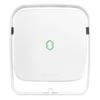
When DIY methods work in bursts, an air purifier runs against smoke particles and odor compounds without stopping. Within one to two hours, a properly sized unit cycles your room's air several times over, pulling particles out with each pass.
What it catches depends entirely on the filters inside, and smoke needs two kinds working together:
- HEPA traps 99.97% of particles down to 0.3 microns, which covers most smoke particulates, but captures nothing of the odor itself.
- Activated carbon absorbs the volatile organic compounds (VOCs) your nose reads as smell, but does nothing for particles.
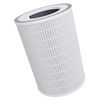
Run only one, and you get a lopsided result: HEPA alone leaves the smell behind, carbon alone lets fine particles slip through. An effective air purifier for smoke pairs both, and skipping the thin pre-filters for a substantial carbon bed is the difference between a unit that works and one that recirculates smoky air. That pairing is why air purifiers eliminate smoke smells at all.
Size is the other half of the decision. Manufacturer room ratings run optimistic, so treat the number on the box as a ceiling, not a target:
- For clean maintenance air, the rated square footage is fine.
- For active smoke, drop down a tier. A purifier rated for 300 square feet will struggle in a 300-square-foot room that still smells, so run it in a smaller space for faster cycling.
Once you've run a purifier and aired the room out, one question is hard to answer by nose: is the smell gone, or has your nose adjusted to it? Scent fatigue sets in within minutes in a room you've been sitting in, so your own judgment stops being reliable fast. A monitor closes that gap.
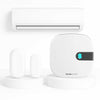
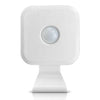
A device like Sensibo Elements reads PM2.5, CO₂, and TVOC continuously, so you can confirm smoke contamination has cleared by the numbers instead of trusting a sense you can't. When TVOC stays elevated after the room looks and smells clean, residue is still off-gassing somewhere, and that's your signal to keep going.
Coffee Grounds, the Underrated Absorber
Dry, unused coffee grounds absorb odors through the same porous mechanism as activated charcoal, just less efficiently. They're cheap, you probably have them, and they work.
- Spread dry grounds on baking sheets or in shallow bowls.
- Place them around the room, or in a closet, drawer, or car interior where the space is enclosed.
- Leave them three to four hours.
The grounds pull in smoke odors while releasing a mild coffee scent most people find pleasant, and a confined space concentrates the effect. One thing matters: use dry grounds, not the wet spent grounds from your morning brew. Wet grounds grow mold within days, while dry grounds from an unopened bag or the discount bin work perfectly.
How to Get Cigarette Smell Out of a Couch or Chair

Upholstered furniture is where smoke hides longest. A sofa absorbs smoke the way a sponge absorbs water, holding it in the foam, the batting, and the fabric itself, then releasing it back into the room for months. One question sorts your whole approach: do the covers come off or not?
Removable cushion covers and slipcovers are the easy case:
- Unzip them and run them through a hot wash with a cup of white vinegar added to the rinse, the same way you'd treat curtains or bedding.
- Skip the dryer and air dry, since heat can bake in any smell that survived the wash.
- Check the care label first, as some covers are dry-clean only.
Non-removable upholstery takes more patience, and usually more than one method stacked together:
- Baking soda, overnight. Sprinkle a generous, visible layer over the entire surface, work it lightly into the fabric, and leave it eight hours or more. Pay extra attention to armrests and the headrest, where skin contact concentrates residue. Vacuum it all out with strong suction.
- Steam cleaning. A rented upholstery steamer drives heat and moisture into the padding, reaching contamination that sits below the surface. Go slowly and overlap your passes; rushing leaves pockets untouched.
- Enzyme odor remover, if the smell returns after drying. When a piece smells fine damp, but the odor creeps back once it's fully dry, that's residue still off-gassing from deep in the foam. An enzyme-based cleaner breaks those organic compounds down instead of rinsing around them. Spot-test on a hidden section first, since enzyme products and some upholstery dyes don't always agree.
Leather and vinyl are a different story. They don't absorb smoke the way fabric does, so a wipe-down with a vinegar-water solution (then a leather conditioner afterward) usually handles them without any of the above.
If a couch still reeks after all three steps, the contamination has reached the internal padding, and at that point professional upholstery cleaning or replacing the piece becomes the honest math.
Deep Solutions That Take Overnight or Longer

Sometimes quick fixes aren't enough. Heavy contamination (a longtime smoker's apartment, fire damage, months of accumulated residue) needs methods that work slowly and thoroughly, reaching smoke embedded deep in materials instead of what's floating in the air.
Activated Charcoal for Stubborn Odors
Activated charcoal outperforms baking soda for serious smoke contamination. The activation process creates millions of tiny pores that trap odor molecules through adsorption, meaning the compounds physically bind to the charcoal surface instead of just sitting nearby.
- Place charcoal bags or bowls of loose activated charcoal around the affected room.
- Concentrate them in corners, closets, and dead spots where air barely moves and particles settle.
- Leave them two to three days minimum, or a full week for severe contamination.
Enclosed spaces magnify the effect, so closets, drawers, storage boxes, and car interiors clear faster than open rooms. For smoke that won't leave your car, tuck charcoal bags under the seats and in the trunk for a week.
Unlike baking soda, activated charcoal is reusable. To recharge a set, lay the bags in direct sunlight for three to four hours every few weeks; the UV exposure releases trapped compounds and restores capacity. One set lasts one to two years with that upkeep.
Washing Everything Fabric
Smoke residue clings to fabric fibers and re-releases odors for months. The only permanent fix is physically removing that residue through washing.
- Start with the obvious items: curtains, throw pillow covers, blankets, bedding.
- Wash in the hottest water the fabric allows, adding a cup of white vinegar to the rinse cycle to cut residue detergent alone misses.
- If anything still smells after washing, skip the dryer (heat sets odors permanently), air dry, then wash again with an enzyme-based cleaner or odor-eliminating additive.
For items that can't go in the machine, a rental steam cleaner from a hardware store penetrates fibers and loosens embedded particles. It handles couches, mattresses, and wall-to-wall carpet. Go slowly, because multiple passes beat one rushed one.
Cleaning Walls, Ceilings, and Hard Surfaces
Smoke leaves an invisible film on every hard surface in a room. The yellowing on a longtime smoker's walls? The same residue exists everywhere, just thinner.
Humidity makes this worse, and it's worth knowing why before you scrub. Damp conditions keep smoke residue pliable and actively off-gassing, so a humid room holds onto the smell longer and re-releases it more readily than a dry one. That's one reason high humidity makes lingering smoke odor worse, and why getting moisture under control supports every other step here.
Start by mixing a cleaning solution: one gallon warm water, half a cup white vinegar, a quarter cup dish soap. For heavy tar buildup, swap TSP (trisodium phosphate) for the dish soap, which cuts nicotine residue more aggressively but needs gloves and ventilation. Then work through the room:
- Wash walls from bottom to top; drips running down a dirty wall leave streaks harder to remove than the original film.
- Work in sections, rinsing your cloth often and changing the solution once it turns yellow.
- Do the ceiling too, with drop cloths down and eye protection on, since smoke rises and ceilings often hold more residue than walls.
- Once everything is dry, consider repainting with an odor-sealing primer like Kilz or Zinsser.
Standard paint lets residue bleed through over time, while shellac-based primers create a true barrier.
When to Call Professionals
Some smoke damage exceeds what DIY can fix. Fires, years of heavy indoor smoking, or smoke that's reached wall cavities and HVAC ductwork may need professional remediation.
Ozone treatment is the most common professional approach. Ozone generators produce O₃ molecules that break down odor compounds through oxidation. It works, but it requires vacating the space completely, because ozone is harmful to breathe. Professionals run generators for 24 to 48 hours, then ventilate thoroughly before anyone returns.
Thermal fogging uses heated solvent to penetrate porous materials and neutralize embedded odors. It reaches what surface cleaning can't: inside wall cavities, deep in carpet padding, throughout ductwork.
Signs you need professional help:
- Smoke smell returns within days of thorough cleaning
- Visible staining that won't wash away
- Contamination from fire rather than cigarettes
- Odor present even after replacing carpet and repainting
FAQ
How long does the cigarette smell last in a room without treatment?
A single cigarette or one-off exposure fades within two to three days with normal ventilation. Heavy or repeated smoking leaves thirdhand residue that off-gasses for three to six months, and a longtime smoker's home can hold the smell for years without aggressive remediation.
Why do I smell cigarette smoke when there is none?
Two causes explain this. The common one is thirdhand smoke: residue embedded in fabric, drywall, and dust slowly re-releasing odor long after anyone has smoked, which a monitor reading elevated TVOC can confirm. The other is phantosmia, a neurological condition where you perceive a smell with no physical source. If no one has smoked anywhere near the space and no residue exists, a persistent phantom smoke smell is worth raising with a doctor.
Does opening windows remove the smoke smell or just dilute it?
Both, and the difference comes down to airflow direction. Simply opening windows mixes fresh air with smoky air, which is dilution; creating cross-ventilation with fans pushes contaminated air outside, which is removal. The second approach works far faster and more completely.
Can the cigarette smell be removed from a house permanently?
Yes, though severely contaminated homes need the full treatment: washing all fabrics, cleaning every hard surface, and sometimes replacing carpet and repainting with sealing primer. The smell comes back when you miss contaminated materials that keep off-gassing, so permanent removal means reaching every surface, including the ones you'd overlook.
Will an air purifier remove the cigarette smell from furniture?
Partially. A purifier captures odor compounds released into the air from furniture, reducing what you smell, but it can't extract contamination already embedded in fabric fibers or foam cushions. For furniture, pair purifier use with direct treatment: baking soda, steam cleaning, or professional upholstery cleaning.
What removes cigarette smell the fastest?
Cross-ventilation with strategic fan placement delivers the fastest noticeable results, often within 15 to 20 minutes, because it physically replaces contaminated air rather than filtering or neutralizing it. For embedded odors in materials, nothing is instant. Activated charcoal and thorough washing give the most complete results but take hours to days.
Is the cigarette smell in my house dangerous?
Thirdhand smoke residue contains carcinogens and toxic compounds that persist on surfaces. Research links thirdhand smoke exposure to DNA damage in human cells and raised cancer risk in animal studies, and children face a higher risk because they touch contaminated surfaces and put their hands in their mouths more often. Removing the smell removes the hazard with it.