



































Key Takeaways
- Schools run a mixed, inherited fleet, ductless splits, rooftop units, VRF, PTACs, and centralized ducted systems, each sitting in a different part of campus.
- In split, PTAC, and window-unit classrooms, the per-room equipment runs on individual IR remotes with no shared control.
- A large share of cooling waste comes from the empty-building hours the school calendar predicts months in advance.
- Central control puts every unit on one dashboard, schedules around the term, powers down empty rooms, and flags faults before they become complaints.
- Retrofitting takes roughly a minute per AC, needs no electrical work, and fits any unit that uses an IR remote.
- ORT Bialik cut its electricity costs 28% in five months across more than 100 classrooms this way.
It's a Friday in late May. The last bus pulls out, the building empties, and somewhere on the second floor a classroom air conditioner keeps running against an empty room until Monday. Multiply that by a few dozen rooms, a long weekend, and a summer, and you've found one of the quietest line items bleeding a school budget.
The air conditioning systems for schools rarely arrive as one plan. They pile up over decades, a building at a time, as budgets allow. A wing from the 1970s runs through-wall units. The gym has a rooftop unit nobody's inspected since the last leak. The new science block got a newer zoned system. You're the one holding a drawer of mismatched remotes and answering for both the comfort complaints and the energy bill, usually with a maintenance team you could count on one hand.
Before any of it can run smarter, it helps to be clear about what's bolted to your roofs and walls.
All You Need to Know About Air Conditioning Systems for Schools
The Five Cooling Systems You'll Find in a School Building
The HVAC systems for schools you're managing almost always fall into one of five families. The table lines them up by where they live and how much control they hand you.
|
System type |
Where it shows up in a school |
Best suited for |
How you control it |
|
Ductless split / mini-split |
Individual classrooms, portables, offices, server rooms, additions |
Single rooms and small zones that need their own setting |
An IR remote per indoor head, one handset per unit |
|
Packaged rooftop unit (RTU) |
Gyms, cafeterias, auditoriums, larger classroom wings |
Big open spaces and whole wings on one system |
A wall thermostat, sometimes tied to a building system, often just a basic programmable one |
|
VRF (variable refrigerant flow) |
Newer buildings and major renovations, admin blocks |
Multi-room buildings that need precise per-zone temperatures |
A proprietary controller or panel, zone by zone |
|
PTAC (through-wall unit) |
Older buildings, dormitories, single rooms, portables |
One room at a time where there's no ductwork |
A built-in panel or an IR remote on each unit |
|
Centralized ducted / central plant |
Large multi-story buildings, districts with a central plant |
Whole-building cooling from one plant |
A building automation system, where one exists |
Most campuses run a mix of these. The equipment closest to students, the classroom air conditioning in splits and PTACs and window units, almost always answers to a handheld remote and nothing else. There's no shared brain telling forty rooms what to do at 3 p.m. on a half-day. The exception is a room on a wall thermostat or a built-in unit ventilator, which answers to its own controls and sits outside what a plug-in smart controller can reach.
A School Sits Empty More Than It Runs

Add up the nights, weekends, holidays, and the long summer, and a school building is unoccupied for more hours of the year than it's full. The cooling, though, usually runs on somebody remembering to shut it off. K-12 districts spend more than $8 billion a year on energy, and by the government's own accounting more than 30% of it goes to waste, with about a tenth recoverable through low-cost changes alone.
That waste is rarely dramatic. It's the split left on over a three-day weekend, the rooftop unit cooling a gym through a two-week break, the row of rooms held at 68°F (20°C) into July because switching each one off means walking the building with a clipboard and a fistful of remotes. Running air conditioning for schools on memory and foot patrol was never going to catch all of that, and the schedule it's fighting is one of the most predictable anywhere. You know months ahead exactly when the building is empty.
We dig into where that money goes in our breakdown of school HVAC and energy costs.
One Dashboard for the Whole Campus

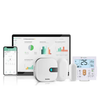
Centralized school HVAC control swaps the walk-through for a single screen. Every unit on campus shows up in one place, grouped by building, floor, or room type, and you set what they do from there instead of from forty different remotes.
The schedule then follows the academic calendar instead of a person's memory. Cooling eases off after the last class, drops to an eco setting on weekends and through breaks, and comes back before the first bell, per room or per building. A school thermostat that resets itself around the timetable does the job that used to eat an afternoon of manual setbacks every time the term shifted.
Faults stop reaching you as complaints. When a compressor starts to go or a room won't hold its temperature, an alert lands while it's still small, before a teacher calls to say the room hit the mid-80s (around 29°C). And a district running several schools sees all of them under one login, which is the gap between one coordinator covering a single campus and one covering twelve.
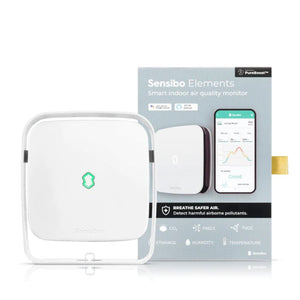
Warm, stuffy rooms are hard to learn in, and CO2 builds fast in a sealed classroom packed with kids. Pairing the cooling to what the air is doing is its own subject, one we cover in indoor air quality monitoring for schools.
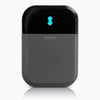
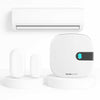
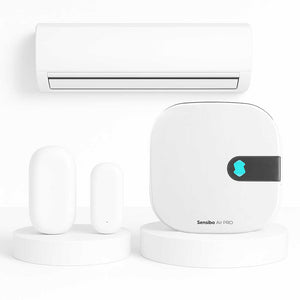
This is the layer we built Sensibo Airbend for. It gives a facilities team one view of every air conditioner it connects to, bulk scheduling around the term, per-room policies, and an alert when something drifts, across whatever mix of equipment the buildings happen to run.
Upgrading Without Pulling Equipment or Pausing a Single Class
You don't rip anything out, and you don't stop a class. Making existing air conditioning systems for schools smart takes about a minute per unit and no electrical work at all.
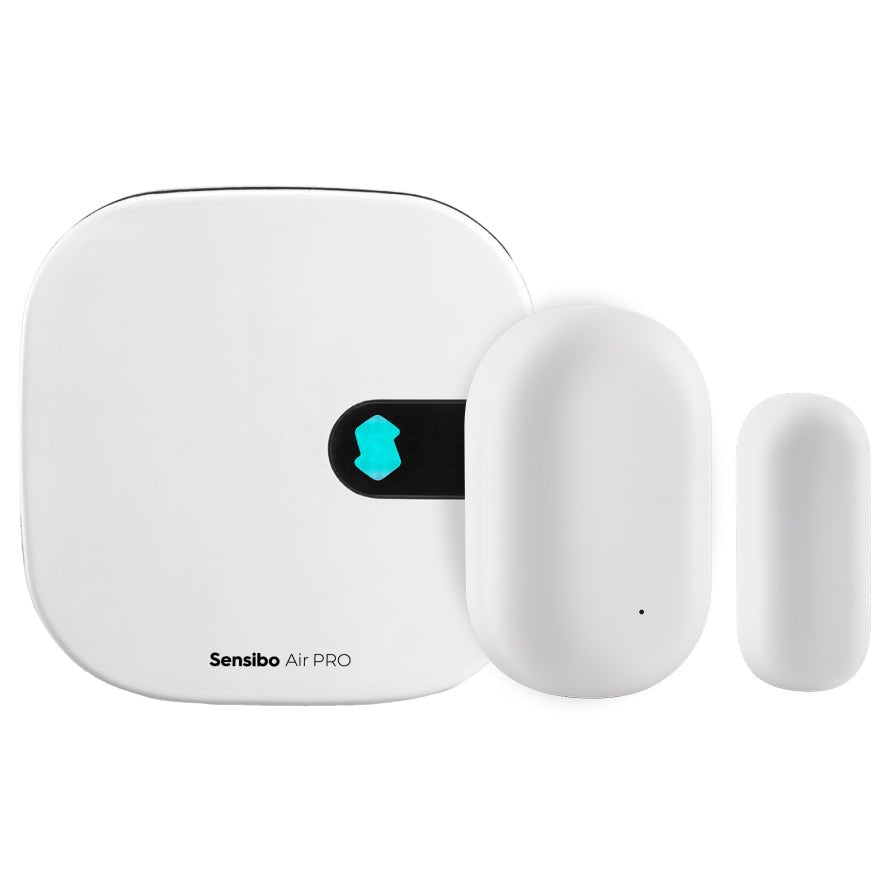
- Clip a small controller to the wall near each AC unit and plug it into a standard outlet.
- Connect it to the school WiFi, where it appears in the dashboard on its own.
- Pair it to the unit through the existing remote signal, and run it from there.
A crew can outfit a full building over one weekend without taking a room offline. The one honest limit is the interface. The controller talks to anything driven by an infrared remote, which covers the splits, mini-splits, PTACs, and window and portable units that make up most of a school's per-room fleet. Hardwired central plants with no IR interface stay on their existing building controls, and the smart layer runs alongside them rather than replacing them.
What Changed at ORT Bialik

ORT Bialik runs more than 100 classrooms across a multi-building campus in Israel. Going in, units cooled empty rooms while no one had a shared view across the buildings, and the bill climbed with no single place to see why. After putting every AC on one system with schedules tied to when rooms are used, the school cut its electricity costs 28% inside five months.
See It Running on Your Own Campus
If you're weighing this for your buildings, the quickest way to know what it saves is to run it on one of them. We put Sensibo Airbend on a single school first, capture the baseline energy and air-quality numbers, then size the rollout from there. You can book a demo for your school and watch the dashboard work on your own units.
FAQ
What happens to scheduling during summer school or evening events?
You set exceptions for the rooms in use. A block booked for summer classes or a Tuesday-night board meeting runs on its own schedule, while everything around it stays in the eco setting. The calendar handles the routine; you override only the rooms that need it.
Does our IT or security team need to be involved?
The controllers sit on the school WiFi, so IT usually wants to know they're joining the network, and that's about the extent of it. There's no wiring, no electrical work, and nothing added to the building's electrical panel. Most schools loop IT in for the WiFi credentials and network policy, then the facilities team handles the rest.
Is there a per-unit license or hardware fee?
Airbend is a subscription service rather than a box you buy per room. Pricing depends on the size of the deployment and what a given campus needs, so each school gets its own quote. There's no separate license tied to each remote.
Can one person manage several schools in a district from one account?
Yes. Multiple buildings and multiple sites live under a single login, with each building's energy data reported separately. A district coordinator can compare performance across schools from one map view instead of logging into each site.
What happens if a classroom loses WiFi?
Remote control and reporting depend on the school's network, so a room that drops off WiFi won't take new commands or report data until it reconnects. For campuses with patchy coverage, it's worth checking signal in the far corners of a building before a full rollout, which is part of why a single-building pilot tends to come first.