





























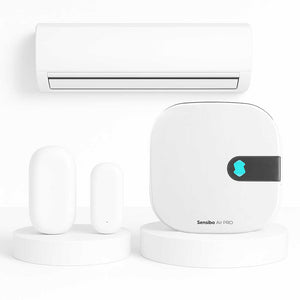





Hotels burn through 3 to 5 times more energy per square foot than a standard commercial office building. Hotel HVAC retrofitting targets the largest share of that spend. Heating and cooling alone account for 35 to 50 percent of a hotel's total energy consumption, and according to ENERGY STAR data, the average American hotel room costs roughly $2,196 in annual energy. That figure represents about 6 percent of total operating costs across the industry.
The math gets worse when you look at occupancy patterns. Hotel rooms sit empty up to 70 percent of the time, yet those empty rooms still draw 60 to 80 percent of the energy they'd use with a guest inside. HVAC retrofitting offers a way to cut into those losses without gutting mechanical infrastructure or taking entire floors offline during peak season.
Where Hotel Energy Dollars Disappear
 Most facility managers can tell you their HVAC is expensive. Fewer can tell you exactly where the money goes. The U.S. Energy Information Administration's 2018 Commercial Buildings Energy Consumption Survey puts numbers to it. Space heating and water heating each claim roughly 20 percent of lodging end-use energy. Cooling, lighting, refrigeration, and computing each fall at 10 percent or below. The breakdown shifts by climate zone and building age, but HVAC always dominates.
A 150-room hotel running at 70 percent average occupancy can waste $30,000 to $60,000 per year conditioning rooms that have no guest inside them. HVAC systems hold setpoints around the clock regardless of occupancy status, and that gap between paying for energy and getting value from it is where most hotel energy budgets bleed out.
A typical hotel HVAC system works fine mechanically. It runs blind. No occupancy data, no adaptive scheduling, no setpoint enforcement between check-out and check-in. HVAC system upgrades focused on controls and monitoring address this gap directly, and they explain why controls-focused retrofits consistently deliver the fastest returns.
What Hotel HVAC Retrofitting Looks Like, From Quick Wins to Full Overhauls
Hotel HVAC retrofitting means adding modern controls, sensors, or components to existing mechanical systems instead of replacing them entirely. The scope ranges from a $100-per-room thermostat swap to a full PTAC fleet replacement at over $2,000 per unit. The right entry point depends on the age of the equipment, the property's climate zone, and how much capital the ownership group will deploy.
|
Retrofit Tier |
Examples |
Typical Cost Range |
Expected Energy Savings |
|
Controls-only |
Smart thermostats, occupancy sensors, IR smart controllers, setpoint limiters |
$50–$250 per room |
15–30% HVAC reduction |
|
Component swap |
ECM fan motors, variable speed drives on AHUs, systematic coil cleaning programs |
$200–$2,000 per unit |
25–50% on targeted system |
|
Full unit replacement |
New PTAC units, mini-split conversions, heat pump installations |
$1,000–$3,000 per room |
40–60%+ vs. aged equipment |
Occupancy-Based Controls, the Fastest Payback
The single highest-impact, lowest-cost HVAC retrofitting move for most hotels is adding occupancy-based controls to guest rooms. Door sensors and PIR or body-heat detectors feed occupancy status to a thermostat or controller. When a room is empty, the HVAC setpoint shifts by 4 to 7°F. When the guest returns, the system recovers to their chosen temperature within a predefined window. Nobody notices the difference except the person reviewing the utility bill.
The savings range is wide, 20 to 50 percent at the room level, because results depend on climate, building envelope, and how aggressively the setback is configured. But even the conservative end of that range represents a payback window most ownership groups would approve without hesitation. Verdant reports an average 45 percent runtime reduction with a 12 to 18 month full payback. The International Energy Agency's estimates land at 20 to 30 percent HVAC reduction with 1 to 2 year payback.
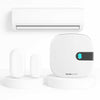
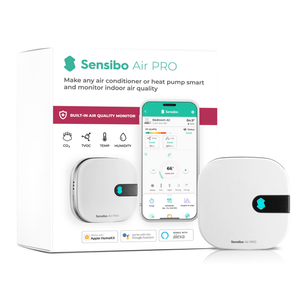
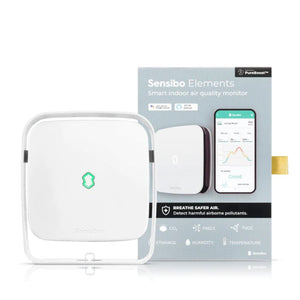
What separates hotel-grade systems from residential smart thermostats is PMS integration. When check-in and check-out data feeds directly into HVAC scheduling, the system drops to energy-saving setpoints immediately after departure and begins pre-cooling or pre-heating before the next guest arrives. That handoff also affects guest satisfaction. J.D. Power data ranks temperature control among the top five factors driving hotel review scores, and a room that greets a guest at the right temperature generates fewer complaints than one that takes 30 minutes to catch up. Smart AC controllers built for commercial hospitality, like Sensibo Airbend, add centralized management and per-zone energy tracking across entire property portfolios from a single interface.
When Controls Aren't Enough, Hardware-Level Upgrades
 Many mid-range U.S. hotels still run PTAC units from the early 2000s or older. A PTAC with an original EER rating around 5.0 degrades to roughly 3.0 after 15-plus years of service. New units rate at EER 10.0 or higher. A direct swap can cut per-room cooling energy by half or more, and some properties recover the replacement cost through energy savings alone.
There is also a regulatory reason not to wait. Starting January 2025, the EPA requires new HVAC equipment to use refrigerants with a Global Warming Potential of 700 or less. Older R-410A units approaching end-of-life will become harder and more expensive to service as refrigerant supplies tighten. Replacing a PTAC fleet on your own timeline is a planned expense. Replacing it because you can no longer get refrigerant is an emergency.
At the component level, ECM motors replacing old PSC motors reduce fan power consumption by up to 60 percent, according to ASHRAE research. For properties with central chilled water plants, variable speed drives on pumps and fans deliver up to 50 percent energy savings with ROI in 6 to 12 months. The physics behind that return is the cubic relationship between fan speed and power draw. Reducing fan speed by just 20 percent cuts power consumption by nearly 50 percent.
Building automation systems tie the individual HVAC system upgrades together across larger properties, handling scheduling, zone control, fault detection, and demand response capability from a single platform.
What Real Hotel Retrofits Return
If you've ever pitched a capital project to an ownership group, you know the first question is never "how much does it cost?" It's "how fast does it pay back?" That's what makes hotel HVAC retrofitting an easier sell than most building upgrades. The documented returns are fast, and the data is public.
|
Property or Study |
Retrofit Scope |
Result |
Payback |
|
15 hotels, Jiangsu Province, China (2022, peer-reviewed) |
HVAC, monitoring, lighting, envelope, hot water |
25%+ energy reduction |
2.55–2.96 years average |
|
InterContinental San Francisco (PG&E documented) |
Thermostat fix and HVAC optimization |
$75,000 in annual savings from one corrected flaw |
Under 4 months |
|
Empire State Building (industry benchmark) |
Windows, HVAC, controls, and lighting |
38% energy reduction |
3 years |
The Sustainable Hospitality Alliance has set industry targets of 66 percent carbon reduction per room by 2030 and 90 percent by 2050. HVAC retrofitting gives hotels the most direct path toward those benchmarks because heating and cooling is the largest controllable energy load in any hotel building. But the numbers above share a common thread. Every project that delivered sustained results paired hardware changes with monitoring and controls.
The Rebound Trap
 This is the part most equipment vendors leave out of their pitch. Efficient hardware alone does not guarantee lower total consumption. A widely cited Chinese national study found that upgrading millions of residential air conditioners to higher-efficiency models increased total electricity consumption across the population. Cheaper cooling per hour led people to run their systems longer and at lower setpoints. Every efficiency gain vanished into changed behavior.
Hotels face the same risk. Replace old PTACs or install VSD-equipped air handlers without pairing those upgrades with occupancy controls, setpoint limits, and enforced schedules, and the new equipment just runs more comfortably while the bill stays flat. The Jiangsu Province study achieved its 25-percent-plus reduction specifically because every hotel in the sample deployed monitoring systems alongside hardware changes. Hardware sets the ceiling for efficiency. Controls determine where you land under that ceiling.
On the financing side, the gap between sticker price and what you end up paying can be significant. Many U.S. utilities cover large portions of VSD and smart control retrofit costs through rebate programs. The Inflation Reduction Act's 25C Energy Efficiency Tax Credit covers 30 percent of qualifying HVAC system upgrades up to specified per-unit limits. One practical note that trips up a lot of projects. File rebate paperwork before purchasing equipment. Approval timelines regularly exceed installation timelines, and retroactive claims are harder to process.
Hotels That Retrofit Last Will Pay the Most
Every year a hotel delays HVAC retrofitting, three cost pressures compound against it. Utility rates keep climbing, with double-digit increases across many U.S. markets in the past three years alone. Refrigerant for aging equipment gets scarcer and more expensive as EPA phase-down rules tighten supply. And the 79 percent of travelers who told Deloitte they prefer eco-friendly hotels are increasingly making booking decisions based on those preferences. The property down the street that already retrofitted is spending less per room, scoring better on ESG benchmarks, and pulling guests who care about where their money goes. Waiting doesn't freeze the cost. It raises it.