




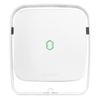

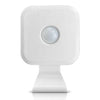
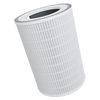


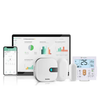

























Once a purifier is plugged in and running, the question of how much real work it's doing isn't obvious. The fan spins the same way regardless. The indicator light glows the same way regardless. Pinning down how to know if air purifier is working comes down to physical checks, sensory evidence, and ideally a sensor reading or two. This guide walks through the signs to watch for, four tests you can run tonight, the monitoring tools that turn guesswork into numbers, and a symptom-cause-solution table for diagnosing problems.
How to Know If Your Air Purifier Is Working
A working air purifier produces strong, uniform airflow at its outlet, lowers visible dust on surfaces within a week, reduces allergy symptoms over two to three weeks, and clears odors faster than the room would on its own. The most objective check uses a separate air quality monitor. Log a PM2.5 baseline with the unit off, run it on high for 30 to 60 minutes, and watch the reading drop. If airflow feels strong, the filter indicator hasn't tripped, and particulate counts fall when the unit runs versus when it sits idle, the purifier is working as designed.
Performance Indicators That Matter
Before testing anything, know what you're measuring against. These specs sit on the box, on the unit itself, or in the manual.
|
Indicator |
What It Means |
What's Good |
|
CADR (Clean Air Delivery Rate) |
Cubic feet per minute of clean air delivered, meazsured separately for smoke, dust, and pollen |
At least two-thirds of the room's square footage (AHAM rule) |
|
ACH (Air Changes per Hour) |
How many times the room's air passes through the filter per hour |
4 to 5 ACH for allergy and asthma sufferers |
|
HEPA Rating |
Filter efficiency at 0.3 micron particles |
True HEPA captures 99.97% |
|
Room Size Rating |
Manufacturer's recommended room size, typically based on 2 ACH |
Match the rating to your actual room and don't trust round numbers |
A purifier rated for 200 sq ft fighting against a 600 sq ft open-plan living room will feel useless, but the unit isn't faulty. It's outmatched by the volume. Sizing kills more perceived performance than any other single factor.
At-Home Tests You Can Run Tonight
 The Airflow Test
Air movement is the prerequisite for everything else.
- Set the purifier to its highest fan setting
- Hold a thin strip of tissue or streamer about six inches from the outlet, where it should flap hard and steady
- Move the strip across the entire outlet to check for uniform airflow, since weak zones point to internal blockage or a tired motor
- Listen as you do it. Healthy fans produce a consistent hum, while struggling ones grind, rattle, or pitch down under load
The Odor Test
Pick a known smell source like a dish of vinegar, post-cooking kitchen air, the litter box, or lingering smoke from a previous evening.
- Let the odor build in a closed room with the purifier off for 15 minutes
- Switch the unit to high and leave it for 30 to 60 minutes
- Sniff at multiple points around the room, where a working carbon stage should noticeably weaken or eliminate the smell
- Same intensity an hour later means the activated carbon is saturated, missing entirely, or undersized for the load
The Dust Test
- Wipe down a few flat surfaces like a bookshelf, the bedside table, or the top of a picture frame, and note how grimy they were
- Run the purifier continuously for 7 days in the same room
- Wipe again and compare, since visible dust on surfaces should drop noticeably
- No improvement points to a bypassed HEPA (poorly seated filter), a saturated filter, or undersizing
The Allergy Test
- Track sneezing frequency, congestion, and eye irritation for one week without the purifier running
- Place the unit in your bedroom, run it medium-to-high overnight, and track another two weeks
- Common allergens like pollen, dander, and dust mite waste are exactly what HEPA captures, so a real reduction should surface within 10 to 14 days
- No change after two weeks usually points to undersizing, a clogged filter, or the wrong filter type for your specific allergen
Tools That Give You Objective Proof
The tissue test tells you something. A sensor tells you exactly how much.
Newer purifiers ship with built-in displays showing PM2.5 (fine particulate), VOC (volatile organic compounds), and humidity in real time. Switch one on after cooking and you can watch PM2.5 readings fall as the unit clears the air. That's quantifiable evidence rather than guesswork.
For purifiers without built-in sensors, a separate monitor solves the problem. Four worth knowing:
- Sensibo Elements carries six sensors covering PM2.5, CO2 equivalent, TVOC, ethanol vapors, temperature, and humidity, with a color-coded LED for at-a-glance reads and historical graphs in the app
- Awair Element tracks PM2.5, CO2, VOCs, temperature, and humidity, and rolls them into a single 0 to 100 score
- Airthings View Plus adds radon detection on top of the standard particulate and gas sensors
- IQAir AirVisual Pro uses a laser particle counter and is widely used as a reference unit for benchmarking other monitors
Place the monitor across the room from the purifier, log a baseline with the unit off, then run the purifier on high for an hour. PM2.5 should drop substantially. Readings of 30 to 50 µg/m³ commonly fall under 10 µg/m³ in a typical bedroom or living space. If the numbers barely move, the purifier is undersized for the room or the filtration stage isn't doing its job.
Care That Keeps Performance Steady
 Most purifiers don't fail outright. They drift. The fan keeps spinning, the motor keeps turning, but every part of the airflow path collects what it was designed to collect, and eventually that catches up with the airflow rate.
Filters first. HEPA stages typically need swapping every 6 to 12 months under normal residential use, while pre-filters and carbon stages run on shorter cycles. For non-washable HEPA filters, don't extend life by rinsing them, since water destroys the fiber matrix and most capture efficiency goes with it. Vacuuming the pre-filter monthly takes thirty seconds and meaningfully extends the life of the stages behind it.
Intake and outlet grilles accumulate a layer of debris that throttles airflow before air ever reaches the filter. A dry microfiber cloth every few weeks handles it.
Onboard sensors need attention too. A soft swab over the sensor port every couple of months prevents dust from skewing readings. A sensor convinced the room is filthy keeps the fan running unnecessarily, while one reading clean air when the room isn't will under-perform silently. You won't catch that without a second monitor for comparison.
Symptom, Cause, Solution
|
Symptom |
Likely Cause |
Solution |
|
Weak or no airflow at outlet |
Clogged HEPA, blocked intake, dying fan motor |
Replace the filter and clear debris from the intake. Airflow still weak with a fresh filter? The motor needs service |
|
Loud rattling or grinding |
Loose component, damaged fan blade, bearing failure |
Power off and inspect. Persistent noise on a clean unit points to motor replacement |
|
Filter at end of life, or seated wrong |
Replace and reset per manual. Indicator returns immediately? Reseat the filter against its gasket |
|
|
Persistent odors |
Saturated carbon stage, no carbon stage at all, or undersized unit |
Swap the carbon filter. For chronic sources, upgrade to a unit with a thicker carbon stage |
|
Dust still building on surfaces |
Undersized for the room, leaky filter seal, bypass airflow |
Match CADR to room size and verify the filter is fully seated |
|
No allergy improvement after 2+ weeks |
Wrong filter type, unit running too low, bedroom door open |
Verify True HEPA, run on medium-high overnight, and close the room while sleeping |
|
Sensor reads "good" but the room feels stuffy |
Dirty sensor port giving false low readings |
Clean the sensor with a dry swab and recalibrate per manual |
|
Burning smell from the unit |
Dust on heating elements (UV/ionizer models) or a wiring fault |
Power off immediately. Smell continues without dust buildup? Stop using and contact support |
|
Higher energy bill, same performance |
Filter so clogged the motor is overworking |
Replace the filter, since a starved motor draws more current trying to maintain airflow |
The pattern across nearly all of these comes down to filter, airflow path, sizing, and seating. Hardware failures stay rare. Maintenance failures pile up.
The Real Test of an Air Purifier
A purifier doesn't need to be exotic to work. It needs the right CADR for the room, a clean filter, an unobstructed intake, and ideally a sensor somewhere telling you the truth about what the air contains. Run the Sensibo Pure or any other purifier without that feedback loop, and you're trusting a hum. Pair it with a monitor and the answer becomes measurable.