




































Key Takeaways
- HVAC is the heaviest energy load in most stores, and the waste hides where nobody looks, off-hours, weekends, empty rooms, and the gaps between shifts.
- Run store by store, each location becomes an energy island with no shared schedule, no shared temperature policy, and no way to compare one against another.
- A central platform fixes this through one dashboard, group control, smart scheduling, occupancy-based automation, and zone-level temperature control, all on the AC units already installed.
- Comfortable stores and lower bills come together, because the savings are pure waste removed, empty space and closed hours, with nothing taken from the sales floor.
- Comparing hundreds of stores and holding one temperature policy across all of them is beyond any manual team, which is the specific job software exists to do.
A retail chain carries its energy waste one store at a time. Each location runs on its own schedule, and nobody watches the combined total until the monthly bill lands. Retail energy management is the work of pulling those separate stores into a single system you can see and steer, and for most chains the largest prize sits inside the HVAC.
Heating and cooling is usually the biggest controllable line on a store's utility bill, and across a portfolio it is also the least watched. One unit left running overnight in a single store looks like nothing. Multiplied across every location and every night, it becomes the largest number on the energy budget. The stores that fix this take control of the air conditioners they already own.
All You Need to Know About Retail Energy Management
- Why HVAC Drives the Retail Energy Bill
- What a Multi-Location Retail Energy Management System Does
- Cutting Energy Waste While Keeping Stores Comfortable
- Why Managing Many Locations Cannot Be Done by Hand
- Pros of Using Sensibo Airbend
- What Live Data Across Every Store Gives You
- Where to Start
- One Chain, One System
- FAQ
Why HVAC Drives the Retail Energy Bill
Heating, cooling, and ventilation account for 34 to 40 percent of energy use in U.S. commercial buildings, the single largest end-use category. Add lighting, and a typical store spends close to 60 percent of its energy on climate and light alone. Energy sits second only to labor among a store's running costs, past four dollars per square foot a year for most formats.

That load turns into waste for three structural reasons.
- The system runs when the store is closed, or in shoulder seasons when the weather barely calls for it, because a schedule was set once and forgotten.
- Settings drift store by store as staff nudge the thermostat, and nobody resets them.
- No central layer connects the locations, so head office has no live view of what any single store is doing.
Left alone, each store becomes its own energy island. Head office sees a monthly bill and a total, never the store that ran cooling through three empty August nights. Sensibo's own figures put the share of daily energy some retail stores burn outside opening hours at 35 to 45 percent, most of it invisible until someone connects the meters.
The recoverable amount is large. A control layer that schedules HVAC to real hours and occupancy trims 5 to 15 percent off a building's energy, and neglected sites give back more than 30 percent, before a single unit gets replaced.
What a Multi-Location Retail Energy Management System Does
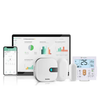
A retail energy management system replaces the scattered thermostats with one control layer that reaches every store at once. The point is reach and visibility. One screen shows every location, and one change can hit a region or the whole chain in seconds.
The core functions map cleanly onto the waste they remove.
|
Capability |
What it stops |
|
One dashboard for every location |
Head office guessing what each store is doing |
|
Group control across stores |
Editing hundreds of thermostats one visit at a time |
|
Smart scheduling tied to trading hours |
Cooling an empty store overnight and on closed days |
|
Occupancy-based automation |
Conditioning stockrooms and back offices nobody is in |
|
Zone-level temperature control |
One setpoint fighting a sunny shopfront and a cold stockroom |
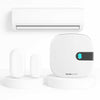
None of this asks for a rip-out. A retail energy management solution sits on top of the split units, packaged AC, and heat pumps already in the store, adding the control logic the hardware never shipped with. Every unit stays in place and answers to one system.
Cutting Energy Waste While Keeping Stores Comfortable
Lower bills and a comfortable store pull in the same direction. The savings come from runtime that served no one, so removing it changes the number on the invoice without changing what a shopper or a cashier feels on the floor.
The waste lives in predictable windows.
- Overnight, when the last shift has gone and the cooling keeps going.
- Across weekends and holidays, when a forgotten schedule runs a closed store at full setpoint.
- In empty rooms, stockrooms, and back offices that get conditioned as hard as the sales floor.
- Between shifts and during slow midday lulls, when occupancy drops but the system does not react.
Comfort improves when control gets tighter. A store held at a steady, sensible temperature is one of the plainest ways to improve the customer experience in retail, and steady conditions feed directly into retail customer satisfaction. Shoppers linger longer in a room that feels right and leave one that is stifling or freezing. When 7-Eleven Hong Kong brought its stores onto a central system, better and more consistent in-store conditions showed up as higher customer satisfaction, with no loss of comfort.
Why Managing Many Locations Cannot Be Done by Hand

A single store on a smart schedule runs itself. The trouble starts at scale, holding hundreds of stores to one standard at once, which manual effort cannot keep up with however large the team.
Three things make it hard.
- Consumption across stores does not compare directly. A flagship with glass walls in Phoenix and a small format in Seattle post kWh totals that look nothing alike for reasons that have nothing to do with waste. Raw numbers mislead until they are normalized for size, hours, and weather, which is arithmetic no regional manager runs by hand every week.
- A single temperature policy has to hold everywhere. Corporate can decide the chain holds one setpoint through trading hours and eases off after close. Making that real in every store, and keeping it real against daily overrides, is the part that collapses without automation.
- Drift is constant and quiet. Every manual setting is one staff member away from being changed and never changed back. Multiply that by hundreds of stores and thousands of adjustments a month, and no headcount keeps pace.
This is the specific work a central platform is built for. It normalizes the comparison, enforces the policy, and catches the drift the same hour it happens, across every store at once.
Pros of Using Sensibo Airbend
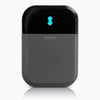
Sensibo Airbend does all of this on the air conditioners a chain already owns. Every unit reports into one dashboard in real time, so a chain runs every store's climate from a single screen, with savings Sensibo puts at up to 40 percent on AC energy. 7-Eleven Hong Kong uses it across more than 300 stores with facilities partner City FM Asia.
What Live Data Across Every Store Gives You
Lower bills are the first return. The same live data pays off three more ways.
- Once consumption is adjusted for floor size, trading hours, and local weather, the store burning more than its peers stands out on sight, and the cause usually follows fast, a failing unit, a propped door, a setpoint nobody reset.
- Runtime and power readings flag a struggling AC unit while it is still limping, so it gets serviced on a plan instead of dying mid-heatwave and taking a store's trading day down with it.
- The same records hand corporate and landlords real store-level energy figures for sustainability and reporting, in place of the hand-built estimates most chains still submit.
Where to Start
A chain with more than a handful of locations can begin without a big project.
- Connect the meters and get every store onto one dashboard, so the waste stops being a guess.
- Fix HVAC scheduling first, since off-hours runtime is the fastest saving and costs nothing to correct.
- Set one temperature policy and let automation hold it, store by store, against the daily drift.
- Roll occupancy and zone rules across the portfolio once the baseline is steady.
One Chain, One System

Better air conditioners were never the fix. The equipment to run a tight, low-waste chain is already bolted to the wall in every store, waiting on the control layer that ties it together. Add that layer and the bills drop while the stores get steadier, within the quarter rather than after a capital project. Head office stops minding a scattered set of stores and starts running one operation. See what that looks like across a retail chain at Sensibo Airbend for Retail.
FAQ
What is retail energy management?
It is the practice of monitoring and controlling a store's energy use, HVAC above all, from a central system rather than store by store. For a chain, the point is one view and one set of controls across every location, so head office can cut waste and hold a consistent standard everywhere at once.
Can one system control different AC brands across all my stores?
Yes. A platform like Sensibo Airbend works through the infrared control the units already use and covers over 10,000 AC models, so mixed hardware across a chain runs under one dashboard. No store needs new air conditioners.
Does saving energy mean my stores get less comfortable?
No. Only the waste comes off, the cooling that ran with nobody on the floor, so shoppers and staff feel no change. Steadier automated control usually keeps a store more comfortable than a hand-set thermostat, and that consistency lifts retail customer satisfaction.
How long does rolling this out across many stores take?
Each controller installs by the AC in minutes, connects over the store's WiFi, and needs no rewiring or new units, so a store goes live the day a technician visits. Large chains run the physical rollout through a facilities partner, the way 7-Eleven Hong Kong onboarded more than 300 stores, and every site joins one dashboard as it comes online.
How does climate control affect the in-store customer experience?
Consistency is what central control adds. Every branch holds the same comfortable conditions instead of depending on whoever last touched the thermostat, so a customer meets the same well-run store on a peak Saturday and a slow Tuesday, in one city or across the whole chain.