




































HVAC systems eat 40-60% of a hotel's total energy bill, and the average guest room sits empty for roughly 60% of its booked hours. Sustainable hotels are closing that gap with smart climate technology that treats empty rooms differently from occupied ones.
Why HVAC Became the First Target for Hotel Sustainability
Heating and cooling outpaces lighting, laundry, and kitchen operations combined as a hotel's single largest controllable expense. ENERGY STAR benchmarking puts the average guest room at roughly $2,196 per year in energy costs alone.
The Sustainable Hospitality Alliance's Global Hotel Decarbonization Report sets the bar:
⚡ 66% carbon reduction per room by 2030. 90% per room by 2050.
LEDs swap in over a weekend. Water-saving fixtures pay for themselves quickly. HVAC touches every room, every hallway, every conference space, every hour of every day. And unlike office buildings, hotels can't enforce a uniform schedule: guests arrive and leave at unpredictable times, prop doors open, and set thermostats to extremes.
A sustainable boutique hotel with 25 rooms in Stockholm documented a 35% reduction in total energy consumption after installing occupancy sensors, smart thermostats, and high-efficiency heat pumps. Lighting accounted for about 20% of those savings. The rest came from HVAC.
What "smart" means in hotel HVAC
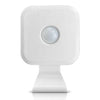
Occupancy-sensing thermostats use passive infrared (PIR) sensors to detect if someone is sleeping, stepped out, or checked out. When no one is present, the system shifts into setback mode, reducing output without shutting down entirely. When the guest returns, the room recovers within minutes.
The distinction from a standard programmable thermostat matters. Programmable units follow fixed schedules. Occupancy-sensing units respond to what is happening in the room right now. A guest who extends their stay, leaves early for the airport, or spends the day at the pool triggers a different HVAC response without anyone pressing a button.
|
Feature |
Traditional Thermostat |
Occupancy-Sensing Smart Thermostat |
|
Adjusts when room is empty |
No |
Yes, automatically |
|
Connects to property management system |
No |
Yes (check-in/out sync) |
|
Reports energy data per room |
No |
Yes, in real time |
|
Supports ESG reporting |
No |
Generates audit trails |
|
Guest comfort disruption |
None (runs constantly) |
Minimal (pre-conditions before arrival) |
Properties running these systems report HVAC runtime reductions of up to 45%, according to Verdant (Copeland), whose thermostats are installed in over 2 million hotel rooms across North America and Europe.
Guest Expectations Have Caught Up to the Technology

For years, the investment case for sustainability in the hotel industry rested on cost savings and regulatory pressure. That calculus changed around 2023-2024 as guest demand became measurable.
Booking.com's 2025 Sustainable Travel Report (32,000 travelers, 34 countries):
- 93% say they want more sustainable travel choices (up from 42% in 2016)
- 67% reported turning off AC/heating when leaving their room in 2023 (up from 43% in 2020)
- 100 million+ room nights booked at sustainability-certified properties in 2025
- 28,000 properties now carry third-party sustainability certifications on the platform (22% YoY increase)
Roughly one-third of travelers across every generation, Gen Z through Boomers, plans to stay at a sustainability-certified property in 2026. This is not a niche preference. Booking.com 2026 Travel Sustainability Report
Guests filter search results by sustainability credentials. Corporate travel managers require green-certified properties as a booking condition. OTAs are prominently surfacing green-certified properties in search results. A hotel without documented energy management becomes harder to find and harder to book.
The Retrofit Advantage: Why Existing Hotels Can Compete
Older properties make up the vast majority of global hotel stock. Smart AC controllers let them compete without replacing existing equipment.
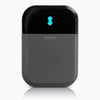
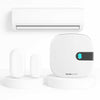
Sensibo's controllers attach to standard infrared-controlled units (mini-splits, window ACs, portable systems) and add remote scheduling, occupancy sensing, temperature automation, and energy monitoring. The company claims compatibility with over 10,000 AC models across all major brands. Installation takes minutes. No electrician required.
For properties in regions where ductless systems dominate (Southern Europe, Southeast Asia, the Middle East, Australia, Latin America), retrofit controllers represent the fastest path to measurable hotel sustainability trends compliance.
How it works in a hotel setting
The controller connects to WiFi and syncs with the hotel's property management system (PMS). Check-out triggers energy-saving mode. Check-in triggers pre-cooling or pre-heating before the guest arrives. Between those events, occupancy sensors adjust output based on room presence.
For a 100-room property at 70% occupancy, this eliminates conditioning for rooms with no one in them, which on any given day includes both vacant rooms and booked rooms where guests are out. Energy data from each controller feeds into dashboards supporting ESG disclosures, LEED documentation, and Green Key certification.
The Data Trail: From Cost Savings to ESG Compliance
Sustainability in the hotel industry has shifted from a marketing talking point to a financing requirement. Investors, lenders, and major brands now require documented ESG metrics as a condition of partnerships and capital access.
Hilton LightStay: the benchmark case study
Launched in 2009, now mandatory across all 5,700+ Hilton properties. Tracks energy, water, and waste across 200+ operational indicators per hotel. The platform uses predictive models to forecast consumption based on occupancy and weather, then flags deviations in real time.
- 2009: $29M in utility savings across 1,300 properties. Energy savings equivalent to powering 5,700 homes.
- 2011: $74M cumulative. 6.6% energy reduction, 19% waste reduction, 7.8% carbon reduction.
- 2024: $1.38B cumulative. IoT-driven predictive modeling, verified by external auditors (KEMA, DEKRA).
IHG and Wyndham Hotels Resorts EMEA have moved in the same direction, naming Verdant as an approved smart thermostat vendor for room-level energy management.
Regulatory Pressure Is Accelerating the Shift
Cost savings and guest preferences drive adoption. Regulation is starting to mandate it.
United States: California's Title 24 and NYC's Local Law 97 now require smart thermostat integration in commercial buildings, including hotels. The latest IECC standards push the same direction. Properties that delay face compliance risk alongside operational inefficiency.
Europe: The EU Energy Performance of Buildings Directive (EPBD) requires large commercial buildings to achieve near-zero energy status through staged improvements. Certain EU countries have introduced regulations requiring buildings to limit AC temperature settings to minimize consumption. Sensibo Airbend is compliant with these requirements, allowing operators to enforce temperature ranges across all rooms from a single policy.
For a sustainable boutique hotel operating independently, the same retrofit controllers available to major chains work at the single-property level. Payback has been documented at under 12 months in some deployments, partly because utility rebates can cover up to 100% of upfront hardware costs. The hospitality industry invested over $4.6 billion globally in energy management upgrades in 2023, and that figure continues to grow as energy prices rise and ESG requirements tighten.
What Centralized Climate Management Looks Like in Practice
A front desk manager can check a guest into room 412 but has no way of knowing room 307 has been cooling an empty space for four hours. Sensibo Airbend closes that gap.
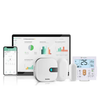
Launched in April 2023, the platform provides a centralized dashboard to monitor and control every AC unit across a property from a single screen, with live data on temperature, humidity, air quality (CO2, TVOC, PM2.5), and occupancy.
 Configurable policies apply across rooms in bulk: presence detection that shuts off AC in empty rooms, door sensors that pause cooling when balconies stay open, predefined temperature limits through a wall-mounted Sensibo Remote, and scheduling synced to check-in/check-out times. One of the first deployments was Prestige Bookings in Coral Bay, Cyprus (14 properties, 100+ rooms). For properties looking to cut hotel carbon footprint with smart climate control, the setup integrates through an open API with no tools required.
Air quality monitoring runs alongside climate control. Sensibo's hardware tracks CO2, volatile organic compounds, and particulate matter per room. The Sensibo Air Pro, recognized as a TIME Magazine Best Invention of 2023, combines AC control with integrated air quality sensors in a single device, giving properties documented proof of healthy indoor environments rather than a vague claim.
The Thermostat That Checks Out When You Do
The most effective sustainability upgrade in a hotel room is one the guest never notices. The AC slows down after they leave, ramps back up before they return, and the carbon report improves on its own. That is the smart climate shift for sustainable hotels: invisible to guests, measurable for operators, and increasingly non-optional for the industry.