



































Key Takeaways
- A through-the-wall air conditioner mounts inside a metal wall sleeve fixed in an exterior wall. The sleeve seals the opening and carries the unit's weight.
- Measure the inside of your existing sleeve (height, width, depth) before buying a replacement, because brands build sleeves to different sizes.
- Room size sets the BTU you need, with extra added for sun, kitchens, and more people in the room.
- Units up to about 14,000 BTU run on a standard 120V outlet. Higher-capacity models need a 240V circuit.
- Models with heating use either electric heat strips (cheaper, less efficient) or a heat pump (more efficient, weaker in hard frost).
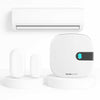
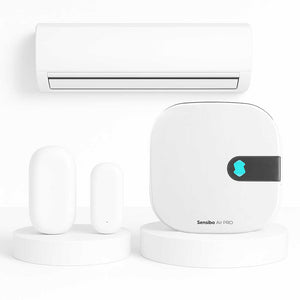
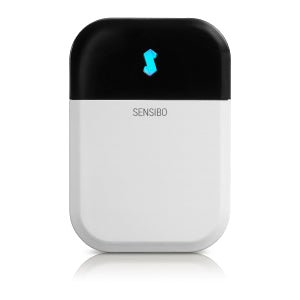
- A smart controller like Sensibo Sky adds app control, scheduling, and geofencing to any IR-controlled unit.
Ever noticed those neat AC units built into apartment walls? A through-the-wall air conditioner mounts permanently inside an exterior wall. It pulls warm air from the room, cools it, and pushes the collected heat outside through the back of the unit. Your windows stay clear, the seal around the unit holds tight, and the cooler becomes a fixed part of the room.
If you're still weighing your options before cutting into a wall, it helps to compare all types of air conditioners first.
All You Need to Know About Through-the-Wall ACs
- How Through-the-Wall Air Conditioners Work
- A Practical Guide to Wall Sleeves and Sizing
- Why Choose a Wall AC Unit
- Through-the-Wall vs Window Air Conditioners
- Choosing the Right Size for Your Room
- Through-the-Wall Air Conditioner With Heat
- What EER and CEER Ratings Mean for Running Cost
- Add Smart Control to a Wall AC Unit
- Installing a Through-the-Wall Air Conditioner
- Maintenance That Keeps It Running
- Before You Buy
- FAQ
How Through-the-Wall Air Conditioners Work
The cooling runs on a refrigerant cycle, the same process behind every standard air conditioner.
Warm air from the room passes over a cold evaporator coil. The refrigerant inside that coil absorbs the heat, and a fan sends the cooled air back into the room. The refrigerant then carries the heat to the condenser coil on the outdoor side, where a second fan releases it outside. The refrigerant cools down, returns to the start, and the loop repeats.
A Practical Guide to Wall Sleeves and Sizing
The sleeve is the metal housing fixed permanently into the opening cut through your exterior wall. The air conditioner slides into it and locks in place. The sleeve holds the unit's weight, seals the gap around it, and tilts a fraction of an inch toward the outside so condensation drains out rather than pooling inside the wall. A true through-the-wall AC cannot mount in the wall without one.
How to Measure Your Existing Sleeve
Measure the inside of the metal sleeve, not the old unit and not the exterior grille. You need three numbers:
- Width and height: measure the clear opening at the inside edges of the sleeve, corner to corner.
- Depth: measure from the front lip to the back edge of the sleeve.
- Wall thickness: note this too, since a very thick or thin wall affects which units seat properly.
Write these down before you shop. Buying a unit rated for your sleeve size saves you from touching the wall at all.
Universal vs Proprietary Sleeves
Sleeves fall into two camps, and the one you have narrows your unit choices.
|
Sleeve type |
What fits |
When it works best |
|
Universal |
Units from several brands within the same size class |
Fresh installs where you choose the sleeve and unit together |
|
Proprietary |
One brand's chassis, sometimes one product line |
Replacing a unit and staying with the same brand |
If your current sleeve is proprietary, the simplest path is a same-brand replacement unit that's built to fit it.
Does a Through-the-Wall AC Without a Sleeve Exist?
Not in any practical sense. The sleeve is what makes a wall installation safe, sealed, and drained. Some internet resources can mention a "through-the-wall AC unit without a sleeve," but these are usually window air conditioners fitted with a support kit, which is a different setup that many building codes and manufacturers don't recommend for a permanent wall cut. A genuine wall unit needs either a sleeve or a fully framed equivalent.
If a New Unit Doesn't Match Your Sleeve
A size mismatch has three fixes, from easiest to most involved:
- Filler and trim: a smaller unit leaves a gap. A spacer kit or trim frame fills and seals it.
- Adapter frame: some brands sell adapters that let their chassis seat in a different-sized opening.
- Full sleeve replacement: if the mismatch is large, or the old sleeve is rusted or bent, replace it. This may mean adjusting the wall opening, so it's the costliest option.
Why Choose a Wall AC Unit
A permanent install pays off in a few ways a portable or window cooler can't match:
- Clear windows. Nothing blocks the view, the light, or an emergency exit. You can still open the window for fresh air whenever you want.
- Better security. The unit locks into a structural opening instead of resting in a window sash that someone could push in from outside.
- Cleaner look. Inside, the unit reads as a built-in feature. Outside, you get a flat grille rather than a box hanging under the window.
- One fixed appliance. No seasonal removal, no reinstalling every spring.
Through-the-Wall vs Window Air Conditioners
Both types cool with the same compressor and refrigerant technology. The differences show up in cost, install effort, and how the unit lives in your home over time.
|
Feature |
Window AC |
Through-the-Wall AC |
|
Unit cost |
$200 to $800 |
$400 to $1,500 |
|
Installation |
DIY in about 30 minutes |
Professional recommended |
|
Permanence |
Removable and portable |
Permanent wall modification |
|
Window blocking |
Yes |
No |
|
Air sealing |
Gaps around the panels |
Tight, weatherstripped sleeve |
|
Noise level |
50 to 65 dB |
50 to 60 dB |
|
Security risk |
Higher on ground floors |
Minimal |
|
Best for |
Renters, short-term cooling |
Owners, long-term use |
Window units work best for renters and temporary setups. A wall AC unit costs more upfront and needs a wall cut, but it seals better, frees the window, and runs a little quieter.
Choosing the Right Size for Your Room
Cooling capacity, the BTU number on the box, decides whether the unit keeps up with your room. An undersized unit runs nonstop and never cools the room. An oversized one cools fast, shuts off before it pulls humidity out, and leaves the room cold and damp.
BTU ratings measure cooling power per hour. Match the room to this chart:
|
Room size (sq ft) |
Recommended BTU |
|
150 to 250 |
6,000 |
|
250 to 300 |
7,000 |
|
300 to 350 |
8,000 |
|
350 to 400 |
9,000 |
|
400 to 450 |
10,000 |
|
450 to 550 |
12,000 |
|
550 to 700 |
14,000 |
Those figures assume average conditions, so adjust for what the room deals with.
Add roughly 10% for a room with heavy sun and subtract about 10% for one in deep shade. A kitchen needs around 4,000 extra BTU because the appliances throw off heat. For every person past two who's regularly in the room, add 600 BTU.
A sunny 300 sq ft kitchen with three people cooking lands closer to 12,000 to 14,000 BTU than the 8,000 the chart lists.
Through-the-Wall Air Conditioner With Heat
Some units heat as well as cool, which turns one appliance into year-round climate control. A through-the-wall air conditioner with heat uses one of two systems, and they behave differently in cost and in cold weather.
|
Heating type |
How it heats |
Efficiency |
Cold-weather behavior |
|
Electric heat strips |
Runs current through a heating element |
Lower, one unit of heat per unit of electricity |
Works at any temperature but costs more to run |
|
Heat pump |
Moves heat from outdoor air into the room |
Higher, two to three units of heat per unit of electricity |
Loses output in hard frost, often needs backup below freezing |
Electric heat strips show up in most heating models. They're cheaper to build, straightforward to run, and fine for mild winters or as a top-up. Heat pumps are less common in this wall format and cost more, but they return far more warmth per dollar of electricity. In a climate with deep winter cold, a heat pump needs a backup heat source once temperatures drop below freezing.
What EER and CEER Ratings Mean for Running Cost
Two numbers on the label predict your running cost.
- EER (Energy Efficiency Ratio) divides cooling output in BTU by watts drawn at 95°F outside. An 8,000 BTU unit pulling 800 watts scores a 10.0. Higher means cheaper to run, so aim for 10.0 or above.
- CEER (Combined Energy Efficiency Ratio) goes one step further and counts standby power, the few watts a unit sips while idle. ENERGY STAR certification asks for a CEER between 10.7 and 12.1, depending on capacity.
Two units with the same BTU can cost very different amounts to run. A 10,000 BTU model at 10.0 CEER draws about 1,000 watts. Run eight hours a day through a four-month summer, that adds roughly $130 to $180 a year to your electricity bill at average U.S. rates.
The same 10,000 BTU model at 12.0 CEER pulls closer to 830 watts, which trims about $25 to $35 off each year. One season makes the difference look minor, but over a 10 to 15 year life it reaches a few hundred dollars. A higher-rated unit tends to cost more at purchase, so compare that premium against how long you plan to keep the unit running.
Add Smart Control to a Wall AC Unit
Here's where most buyers miss a huge opportunity.
Stock units come with basic remotes and limited controls. You manually adjust temperatures, forget to turn them off when leaving for work, and come home to either a sweltering room or one that's been cooling empty space for eight hours.
Smart controllers change everything.
The Sensibo Sky plugs into any wall outlet and communicates with your through-the-wall AC unit over infrared, the same signal your remote already uses. Setup takes about a minute with no wiring. From the app, you get:
- Phone control from anywhere, so you can cool the room before you arrive.
- Geofencing that switches to an energy-saving mode when you leave and starts cooling as you approach.
- Climate React, which watches temperature and humidity and runs the unit only when the room crosses your set limits.
- Scheduling and voice control through Alexa, Google Assistant, and Siri.
Sensibo puts the savings at 25 to 40% on cooling costs. At $119 to $139 for the Sky, it tends to pay for itself inside the first season.
Installing a Through-the-Wall Air Conditioner
A wall install differs from a window one, so most people hire an HVAC contractor.
The process breaks down into clear steps:
- Pick a spot on an exterior wall that's clear of hidden wiring and plumbing.
- Cut a rectangular opening to match the sleeve dimensions exactly.
- Fit the sleeve with the correct outward drainage tilt.
- Weatherproof and insulate around the sleeve edges.
- Run power to the spot, which often means a dedicated circuit.
- Slide the unit into the sleeve and secure it.
- Finish the interior and exterior trim.
Professional installation runs $200 to $500, depending on wall construction and wiring. DIY is possible for experienced hands, but check local codes first, since some places require a permit.
Electrical Requirements
Power is the step people overlook, and it can add real cost. Two setups cover most units:
- 120V: units up to about 14,000 BTU run on a standard 120V outlet, the kind already in the room.
- 240V: higher-capacity units need a 240V supply, which requires its own circuit and a matching outlet. If that outlet isn't already there, budget for an electrician to run one.
Before you buy, check the nameplate on your current unit or ask an electrician what the room's wiring can handle. It also helps to know how many amps your air conditioner draws, so the circuit you have (or add) is rated for it.
Maintenance That Keeps It Running
Skip upkeep and efficiency slides 5 to 15% a year while parts wear out faster. The routine is short:
- Monthly in cooling season: clean or swap the air filter and clear debris off the exterior grille.
- Once a year: clean the evaporator and condenser coils, confirm the condensate drain flows freely, and check the sleeve weatherstripping for gaps.
A well-kept unit lasts 10 to 15 years. A neglected one gives out at 5 to 8.
Before You Buy
To bring everything above together, here are your steps in order to take them. Each choice narrows the next, so moving through them in sequence saves you from backtracking.
- Start with the sleeve. If one is already in the wall, measure it first. Its size decides which units you can consider at all, so nothing else gets settled until this does.
- Check the power next. Match the unit's voltage to what the room can supply. A 240V unit in a room wired only for 120V means an electrician and added cost, which can push you toward a smaller model.
- Size to the room, then adjust. Take the BTU for your square footage and add for sun, a kitchen, or a crowd. This is the call people feel every summer if they get it wrong.
- Settle the heating question. For one unit across both seasons, pick electric strips for a lower price or a heat pump for lower running costs, with your winter lows in mind.
- Add up the real cost. Total the unit, a sleeve or filler kit if the size shifted, any electrical work, and professional install. That figure comes in well above the price tag on the unit alone.
FAQ
Can I install a through-the-wall air conditioner in an apartment?
Only with your landlord's written permission, since the job cuts a permanent hole in an exterior wall. Many leases forbid structural changes outright. If you rent and the wall opening isn't already there, a window unit or a portable cooler is the safer choice.
How much electricity does a through-the-wall air conditioner use?
It depends on the BTU and the efficiency rating. A common 10,000 BTU unit pulls roughly 900 to 1,200 watts while cooling. Running it a few hours a day through summer adds a moderate amount to the bill, and a higher EER or CEER rating brings that figure down.
How much does a wall sleeve cost separately?
A sleeve on its own usually runs about $50 to $150, depending on brand and size. Proprietary sleeves run toward the higher end. If you're replacing both the sleeve and the unit, budget for the pair plus any wall adjustment if the dimensions change.
Can I move a through-the-wall AC to a different wall?
Not without new work. The unit is tied to its sleeve and the opening cut for it. Moving it means framing a new opening in the other wall, fitting a new sleeve, and running power to that spot. The old opening then needs sealing and patching.
Can I replace a window AC with a through-the-wall unit?
Yes, but it means cutting the wall and fitting a sleeve. A window chassis and a wall chassis are built differently, so you can't slide a window unit into a wall and expect proper support or drainage. Plan for the sleeve and the opening.
How loud are wall AC units?
Most residential models run between 50 and 60 decibels, close to the level of normal conversation. Models with variable-speed compressors run quieter. A tight sleeve seal also cuts down on rattle and outside noise.
What is the difference between a through-the-wall AC and a PTAC unit?
A PTAC is a packaged terminal air conditioner, the larger, heavier type used in hotels and offices, usually with heating built in as standard. A residential wall unit is smaller, quieter, and lighter. Both need an exterior wall, but PTACs use their own sleeve size and wiring.