

































Key Takeaways
- A clogged filter causes more cooling failures than any other issue, so check it first.
- Dead thermostat batteries, a fan set to ON, or the wrong mode can cause the same symptoms as a serious system failure.
- Frozen coils signal airflow or refrigerant problems that get worse if ignored.
- Refrigerant leaks always need a certified technician. Homeowners can't legally buy refrigerant for home AC systems.
- Annual maintenance costs far less than emergency summer service calls.
When the AC is not cooling, but the fan is running, the system has power and the blower works, so the fault is somewhere in the cooling cycle. Many of these cases come down to a dirty filter or a wrong setting, and you can check both in a few minutes before paying for a service call.
A completely silent unit with a blank display points to a power problem instead. An AC that won't turn on usually has a tripped breaker or a failed capacitor behind it, and none of the fixes below will help until power is restored.
All You Need to Know About an AC Running but Not Cooling
- Quick Diagnostic Guide
- Dirty or Clogged Air Filters
- Thermostat and Mode Settings
- Frozen Evaporator Coils
- Dirty Condenser or Evaporator Coils
- Low Refrigerant or Refrigerant Leak
- Fan Motor or Blower Problems
- Blocked or Leaking Air Ducts
- Split, Window, and Portable AC Units Not Cooling
- When to Call a Professional
- FAQ
Quick Diagnostic Guide
|
Symptom |
Likely Cause |
DIY or Pro? |
|
Weak airflow from vents |
Dirty filter or blocked ducts |
DIY |
|
Fan blows room-temperature air, outdoor unit silent |
Fan set to ON or wrong mode |
DIY |
|
AC runs, but house stays warm |
Thermostat settings or dirty coils |
DIY first |
|
Ice on refrigerant lines |
Frozen coils or low refrigerant |
DIY, then Pro if it returns |
|
Hissing sound near indoor unit |
Refrigerant leak |
Pro only |
|
Outdoor fan not spinning |
Failed motor or capacitor |
Pro |
|
Water dripping from indoor unit, cooling stops |
Clogged condensate drain |
DIY check, then Pro |
|
Some rooms cooler than others |
Duct leaks or blockages |
DIY check, Pro for sealing |
|
System cycles on and off rapidly |
Thermostat issue or wrong AC size |
DIY check, then Pro |
1. Dirty or Clogged Air Filters
When your AC is not cooling properly, start here. Your filter traps dust, pet hair, and debris before they reach internal components. After a few months of heavy use, a clogged filter cuts airflow so much that the system runs longer and still can't reach the set temperature.
You'll notice weak airflow from vents, a system that runs constantly without reaching set temperature, and visible dust buildup on vent covers.
Locate your filter behind a return vent or inside the air handler. Hold it up to light. A clean filter lets light through easily. Replace it every 30 to 90 days depending on pets and air quality, and keep to a regular cleaning schedule for your AC filters so the problem doesn't come back.
Mini-splits and window units use a washable mesh filter behind the front panel. Rinse it under running water, let it dry completely, and slide it back in.
Cleaned the Filter but AC Still Not Cooling
First, make sure the filter was replaced or washed. Tapping dust out of a disposable filter leaves the fibers clogged, and airflow stays low. Check that the new filter is the size your system calls for and fits its slot without gaps.
Then compare what you feel at the vents:
- Strong airflow, warm air. The filter is no longer the issue. The cause is most likely frozen coils, dirty coils, or low refrigerant (causes 3, 4, and 5).
- Weak airflow even with a clean filter. Walk through the house and open every supply vent. Move furniture, rugs, or curtains that block return grilles. If airflow stays weak after that, the blower or ductwork needs a technician.
2. Thermostat and Mode Settings
A wrong setting or a failing thermostat can leave your air conditioner not cooling even when every other component works.
The signs include a display showing correct settings while the system doesn't respond, erratic cycling on and off, or temperatures throughout your home that don't match what the thermostat shows.
Replace the batteries even if you think they're fine, since weak batteries cause strange behavior. Set the temperature at least 5 degrees below the current room temperature. Make sure the thermostat isn't mounted near a sunny window or another heat source, which throws off its readings.
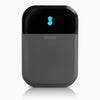
On mini-splits and window units, a controller with its own temperature sensor, such as Sensibo Sky, shows the real room reading in the app, which makes a sensor problem easy to spot.
Why Is My AC Not Cooling but the Fan Is Running?
Check the fan and mode settings first. On a central system, a thermostat fan set to ON keeps the blower running all the time, including between cooling cycles. Whenever the compressor rests, the vents blow room-temperature air. Set the fan to AUTO so it runs only while the system cools.
On a mini-split, window, or portable unit, look at the mode on the remote or in the app:
- Fan moves air without cooling it.
- Dry removes moisture at a low fan speed and cools much less.
- Auto can switch to fan-only when the room is close to the set temperature.
Select Cool. If the settings are correct and the outdoor unit stays silent, check the outdoor fan and compressor (cause 6).
Call a pro if fresh batteries and correct settings don't help, or if your thermostat is over 10 years old. Wiring issues and calibration problems need professional diagnosis.
3. Frozen Evaporator Coils
Ice on your indoor coils sounds impossible, since the system produces cold air. Frozen evaporator coils are still a common reason for an air conditioner not cooling your home. When airflow drops or refrigerant runs low, the coils get too cold and moisture freezes on contact. Once ice coats them, cooling stops completely.
Look for ice on refrigerant lines near the indoor unit, water pooling around the air handler, or warm air from vents despite the system running.
Turn off the system completely and let the ice melt. This takes several hours. Running a frozen system risks serious compressor damage. While you wait, check your air filter and replace it if dirty. Once everything thaws, restart and monitor closely.
Call a pro if ice returns after thawing and filter replacement. Recurring freezing usually means refrigerant leaks or airflow problems beyond the filter.
4. Dirty Condenser or Evaporator Coils
Your AC has two coil sets doing opposite jobs. Indoor evaporator coils capture warmth from your home's air. Outdoor condenser coils release that heat outside. When either becomes coated with grime, heat transfer drops and your AC is not cooling despite running longer cycles.
You might notice your outdoor unit covered in grass clippings, leaves, or pollen. The system runs but doesn't cool effectively, and energy bills climb higher than normal.
Keep vegetation trimmed at least two feet from your outdoor unit. Gently rinse condenser coils with a garden hose at the start of cooling season, spraying from inside out to push debris away from the fins. For indoor coils, proper cleaning techniques prevent damage while restoring efficiency.
Call a pro if coils appear bent, corroded, or damaged. Heavy biological growth on evaporator coils requires specialized cleaning chemicals.
5. Low Refrigerant or Refrigerant Leak
Refrigerant absorbs heat inside your home and releases it outside through the condenser. It circulates in a closed loop and should never need topping off. If the level drops, the system has a leak.
Warning signs of a refrigerant leak:
- Warm air from vents despite continuous operation
- Ice forming on refrigerant lines
- Hissing or bubbling sounds near the indoor unit
- Cooling performance degrading over weeks
Homeowners can't fix this one. Under EPA rules, only certified technicians can buy refrigerant for home air conditioners, and adding refrigerant without fixing the leak wastes money and harms the environment.
Call a pro immediately if you notice any of these signs. Continuing to run a low-refrigerant system destroys the compressor, and replacing one costs $1,000 to $2,500.
6. Fan Motor or Blower Problems
Two fans keep your system working. The condenser fan in your outdoor unit pulls air across hot coils. The blower fan inside pushes cooled air into your rooms. When either fails, cooling suffers immediately.
Signs of fan trouble:
- Outdoor fan not spinning when the system runs
- Weak airflow from indoor vents
- Grinding, squealing, or humming noises
- Outdoor unit overheating and shutting down
Check that nothing blocks the outdoor fan blades. For the indoor blower, make sure all vents are open and unobstructed. On a mini-split, the indoor blower is a long cylindrical wheel behind the louvers, and dust on its blades reduces airflow. If you suspect your AC fan isn't spinning properly, a visual inspection can confirm if the motor runs at all.
Call a pro if fans don't spin, make unusual noises, or spin slowly. Motors, capacitors, and electrical connections require professional repair.
7. Blocked or Leaking Air Ducts
Your AC might produce cold air that never reaches your living spaces. When the AC is running but not cooling some rooms, homeowners usually check the outdoor unit first, and the leak in the ductwork goes unnoticed. This cause applies to central systems only, since ductless mini-splits send air straight from the indoor unit into the room.
The telltale signs are certain rooms staying consistently warmer than others, visible gaps or disconnections in accessible ductwork, dust blowing from vents when the system starts, and higher energy bills without explanation.
Check accessible ductwork in attics and basements for visible damage. Run your hand along joints while the system operates and feel for escaping air. Seal small gaps with mastic sealant or metal tape. Standard duct tape fails over time.
ENERGY STAR estimates that a typical house loses 20 to 30 percent of the air moving through its ducts to leaks, holes, and poorly connected sections. Professional duct sealing and testing can often pay for itself through lower energy bills, especially in older homes.
Split, Window, and Portable AC Units Not Cooling
Each of these unit types has a weak point that central systems don't share.
Split Systems
When a split aircon is not cooling while the indoor fan keeps running, check the condensate drain. Systems with a condensate pump, along with ducted air handlers, use a float switch that cuts cooling when water backs up in the drain pan. Clear the drain line and empty the pan, and cooling usually resumes.
Wall-mounted mini-splits that drain by gravity show a blocked line differently: water drips from the indoor unit. Clear the line before the leak damages the wall. If the indoor unit flashes an error code, the manual will list what it means.
Window Units
Check the seal between the unit and the window frame. Gaps around the side panels or foam strips let hot outdoor air into the room. A dirty filter also hurts window units more than larger systems, because they move a smaller volume of air and lose a bigger share of it to a clogged filter.
Portable Units
The exhaust hose is the weakest point. A kinked, overstretched, or poorly sealed hose lets hot exhaust air leak back into the room. Keep the hose as short and straight as possible, and seal the window kit around it.
A portable aircon that is not cooling after hours of humid weather often has a full condensate tank. Many models stop cooling until the tank is drained, so empty it regularly.
When to Call a Professional
Some problems respond to five minutes of homeowner troubleshooting. Others demand expertise.
Call immediately if you notice:
- Burning smells or visible smoke
- Electrical buzzing or sparking
- Refrigerant leak symptoms (hissing sounds, ice on lines)
- System repeatedly tripping the circuit breaker
Schedule a visit soon for:
- Ice that returns after thawing and filter replacement
- Strange noises like grinding, squealing, or banging
- Fan motors not running or spinning slowly
- Cooling performance declining over time
Professional diagnosis typically runs $75 to $150, plus parts and labor for repairs. Annual maintenance catches most problems before they cause summer failures, and it costs far less than emergency service during a heat wave.
Catching Cooling Problems Early With Sensibo Air Pro
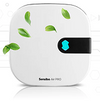
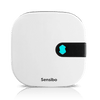
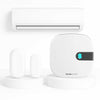
Sensibo Air Pro tracks run time and the gap between the set temperature and the real room temperature to catch cooling problems early. Its built-in sensor measures temperature and humidity in the room you're cooling, so the readings show what the AC delivers to that space.
The app also records how long each cooling cycle lasts. If the AC runs for more than 45 minutes without reaching the setpoint, or the room temperature stops dropping while the system is on, you get an alert on your phone. Dirty coils and slow refrigerant leaks reduce cooling output gradually, so these patterns usually appear before anyone in the house feels the difference.
When an alert comes in, you can respond from the app:
- Switch the AC off remotely if you suspect frozen coils, so the ice melts before it damages the compressor.
- Open the temperature and humidity history to see the day cooling started to slip.
- Ask the built-in AI Assistant why run times or energy use changed this month.
- Show the history to your technician, who can then start the diagnosis knowing when the problem began.
FAQ
Why is my AC running but not cooling the house?
If the vents blow cold air but the rooms stay warm, the system may be too small for the space, or heat coming through sun-facing windows and weak insulation outpaces it on the hottest days. A technician can run a load calculation to check the sizing.
Why is my AC running but not blowing cold air?
The most common causes include dirty filters, the wrong fan or mode setting, frozen evaporator coils, dirty condenser coils, and low refrigerant from leaks. Start with your filter and thermostat before investigating complex issues.
I cleaned my filter, but my AC is still not cooling. What next?
Check the filter's MERV rating against your system's manual. A high-MERV filter the blower wasn't designed for can restrict airflow even when it's brand new.
Can I fix my AC not cooling on my own?
Many problems have DIY solutions: replacing filters, clearing debris from outdoor units, and checking thermostat settings. Refrigerant issues, electrical repairs, and compressor problems require licensed technicians.
How do I know if my AC needs refrigerant?
Signs include ice on refrigerant lines, warm air from vents despite continuous running, and hissing sounds near the indoor unit. Low levels always indicate a leak, because refrigerant doesn't get used up in normal operation.
How often should I service my AC to prevent cooling problems?
Schedule professional maintenance each spring before cooling season begins. Between visits, check filters monthly during heavy use.
Should I turn off my AC if it's not cooling?
Yes. Running a malfunctioning system risks compounding the damage, so shut it down immediately if you notice frozen coils, strange sounds, or burning smells. For minor issues like a dirty filter, briefly running it while troubleshooting is fine.