


































Key Takeaways
- Cold air at the vents doesn't guarantee enough cooling: the house stays warm whenever heat coming in is greater than the heat your AC can remove each hour.
- Measure the temperature split first: a difference of roughly 14-20°F (8-11°C) between return and supply air means the AC is cooling normally. A lower split points to refrigerant or coil problems.
- Compare cooling capacity with the heat load: a single room needs roughly 20 BTU per square foot, adjusted for sun, people and kitchens. A whole house needs a proper Manual J load calculation.
- Sun, air leaks and ducts steal capacity: closing blinds, sealing gaps and fixing leaky ducts often fix a house that never reaches the setpoint.
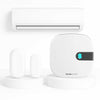
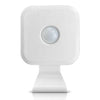
- Sensor location matters: a wall-mounted AC measures the temperature at the indoor unit, so a Room Sensor placed where you sit shows the temperature you actually feel.
- Call a technician for a low split after a filter change, ice on the lines, hissing sounds or a dead outdoor fan. Don't add refrigerant yourself.
If your AC is blowing cold air but not cooling the house, the unit is usually working but can't keep up with the heat. It may be too small for the space, heat may be pouring in through sun, windows and leaky ducts, cold air may not be reaching distant rooms, or the thermostat may be reading the wrong spot. A low refrigerant charge or a dirty coil can also make air feel cool when it isn't cold enough, and measuring the temperature split at the vents tells you which case you're dealing with.
This guide is for vents that blow cold air while the house stays warm. If your vents blow warm or room-temperature air, that's a different fault, covered in our guide to the 7 common causes of an air conditioner running but not cooling. Below is a step-by-step diagnosis you can do with a thermometer and about an hour.
All You Need to Know About an AC That Blows Cold but Won't Cool

- What Does Blowing Cold Air but Not Cooling Actually Mean?
- Step 1: Measure the Temperature Split to Confirm the AC Is Cooling
- Step 2: Is Your AC's Cooling Capacity Big Enough for the Space?
- Step 3: Check Heat Gain From Sun, Windows and Doors
- Step 4: Look for Airflow Problems and Leaky Ducts
- Step 5: Is the Thermostat or AC Sensor Reading the Wrong Spot?
- When Should You Call an HVAC Technician?
- FAQ
What Does Blowing Cold Air but Not Cooling Actually Mean?
It means the AC is producing cold air, but the indoor temperature never reaches the setpoint, or only reaches it late at night. The air feels cool on your hand, yet the system runs for hours and the house stays at 78°F when you asked for 72°F.
This is a heat-balance problem, not the classic warm-air fault. Every hour, your AC removes a fixed amount of heat (its cooling capacity), while the sun, outdoor air, people and appliances keep adding heat. When more heat comes in than goes out, the temperature stops dropping.
Five things usually explain the gap:
- Weak cooling at the coil: the air is cool, but not as cold as it should be.
- Undersized system: the capacity is too small for the room or house.
- Excess heat gain: sun, glass, gaps and open doors add more heat than the system was sized for.
- Airflow and duct losses: cold air leaks out of the ducts or never reaches far rooms.
- Wrong sensor location: the thermostat reads cooler than the spot where you sit.
Work through them in the order below. Each step either clears a cause or points you to the fix.
Step 1: Measure the Temperature Split to Confirm the AC Is Cooling

The temperature split (also called delta T) is the difference between the temperature of the air going into the AC and the air coming out. It's the quickest way to tell whether the unit is cooling properly or just moving cool-ish air.
How to Measure It
- Check the air filter first: a clogged filter skews the reading, so replace it if it's dirty.
- Run the AC on cool for at least 15 minutes so the reading stabilises.
- Measure the return air: hold a probe or digital thermometer at the return grille, or at the air intake on top of a wall-mounted indoor unit.
- Measure the supply air: put the thermometer inside the supply register closest to the indoor unit, or right at the louvers of a split unit.
- Subtract the supply reading from the return reading.
What the Numbers Mean
Most central and split systems produce a split of roughly 14-20°F (about 8-11°C) under normal conditions. On very humid days the split can be a little lower, because more of the AC's work goes into removing moisture rather than lowering the temperature.
|
Temperature split |
What it usually means |
Next step |
|
Below 14°F (8°C) |
The AC isn't removing enough heat: low refrigerant, a dirty coil or a failing component |
Clean the filter and outdoor coil, then retest. If the split is still low, call a technician |
|
14-20°F (8-11°C) |
The AC is cooling normally |
Check capacity, heat gain, airflow and sensor location (Steps 2-5) |
|
Above 20°F (11°C) |
Too little air is moving across the coil: a dirty filter, a blocked return or a coil starting to freeze |
Check the filter, the returns and the coil for ice. If you see ice, switch the AC off |
A normal split is good news. It means the equipment works, and the problem is how much heat it's fighting or where the cold air goes.
Step 2: Is Your AC's Cooling Capacity Big Enough for the Space?
Cooling capacity is the amount of heat an air conditioner can remove per hour. It's measured in BTU per hour or in tons, where 1 ton equals 12,000 BTU/h. See our cooling capacity glossary entry for the full definition.
Find Your Unit's Capacity
Check the nameplate on the indoor or outdoor unit, the manual, or the model number. Model numbers often include the capacity in thousands of BTU (for example, 24 for 24,000 BTU/h, or 2 tons). For US central systems, the AHRI certificate lists the rated capacity of your matched indoor and outdoor units.
Estimate the Heat Load
For a single room, ENERGY STAR's room AC sizing guidance works out to roughly 20 BTU per square foot, with these adjustments:
- Very sunny room: add 10%.
- Heavily shaded room: subtract 10%.
- More than two regular occupants: add 600 BTU for each extra person.
- Kitchen: add 4,000 BTU.
By that guidance, a sunny 400 sq ft living room needs around 8,800 BTU/h. A 6,000 BTU/h unit in that room will blow cold air all afternoon and still never catch up.
For a whole house, the right method is a Manual J load calculation by an HVAC contractor. It accounts for insulation, windows, orientation and local climate, so treat rules of thumb as a sanity check rather than a substitute.
Undersized vs Oversized
An undersized AC runs nonstop and can't hold the setpoint on hot afternoons. An oversized AC cools the air quickly and shuts off before it removes enough humidity, so the thermostat shows the right number but the house feels clammy and warm. If humidity is the issue on a split unit, dry mode can help.
Systems are also sized for typical local peak temperatures. During a heat wave hotter than that, it's normal for indoor temperatures to creep up. Read more about how outside temperature affects your air conditioner.
Step 3: Check Heat Gain From Sun, Windows and Doors
Heat gain is all the heat entering your home, from outside and from sources inside it. Even a correctly sized AC falls behind when heat gain is higher than the design assumed.
- Direct sun on glass: west- and south-facing windows (north-facing in the Southern Hemisphere) let in a lot of heat in the afternoon. Close blinds or curtains before the sun reaches them.
- Air leaks: gaps around doors, windows and attic hatches let hot air in. Weatherstripping and caulk are cheap fixes.
- Open doors and windows: a door left open to the garage or patio can cancel out a room's cooling.
- Hot attic: poor attic insulation or ventilation turns the ceiling into a radiator.
- Internal heat: ovens, dryers, gaming PCs and incandescent bulbs all add to the load.
Notice when the problem happens. If the house holds its temperature in the morning but drifts up from mid-afternoon, the problem follows the hottest time of the day, and heat gain is the prime suspect.
Step 4: Look for Airflow Problems and Leaky Ducts

If the split at the nearest vent is fine but far rooms stay warm, the cold air isn't getting there. Airflow problems are the most common reason one end of the house stays hot.
Quick Airflow Checks
- Filter: replace it if it's dirty. Most filters need changing every 1-3 months during cooling season.
- Supply registers: open all of them and move furniture or rugs off them. Closing vents in unused rooms raises duct pressure, and the extra air doesn't reliably reach the rooms you want.
- Returns: keep return grilles clear. A room with a closed door and no return can't get enough air.
- Compare vents: measure the temperature and feel the airflow at near and far registers. A big difference at distant vents points to duct losses.
Leaky or Uninsulated Ducts
ENERGY STAR estimates that a typical duct system loses 20-30% of the air it moves through leaks, holes and poorly connected sections. Ducts running through a hot attic also warm the air on the way. Look for disconnected joints and torn insulation wherever ducts are visible, and have a contractor test and seal the rest.
If you rely on one ductless unit to cool several rooms, airflow is limited by design. Our guide on how to cool multiple rooms with one AC covers fan and door strategies.
Step 5: Is the Thermostat or AC Sensor Reading the Wrong Spot?
Your AC cools until its own sensor says the setpoint is reached, not until you feel comfortable. If that sensor sits in a cooler spot than the place where you are, the AC eases off while your room stays warm.
Central Thermostats
A thermostat in a shaded hallway or near a supply vent can read several degrees cooler than a sunny bedroom. One in direct sun or next to a lamp reads too warm and overcools the rest of the house. To check, put a separate thermometer next to the thermostat and another in the problem room, then compare the readings.
Wall-Mounted Split Units
The built-in sensor of a wall-mounted AC reads the air at the indoor unit, high on the wall where cold air circulates, not at the sofa or bed. The display can say 72°F while the far side of the room is noticeably warmer.
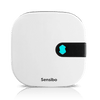
A Sensibo Room Sensor placed where people actually sit reports the temperature there. That shows you the gap, and lets Sensibo control the AC by the reading in the room instead of the reading at the unit.
Give the AC Time to Catch Up
Setting the thermostat to 60°F won't cool the house faster than the AC's maximum capacity allows. It only risks overshooting. If the house is at 85°F when you get home, it simply needs time.
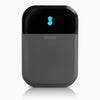
With Sensibo Air or Sensibo Sky, you can start cooling from your phone or on a schedule before you arrive, so the room is already comfortable. Our guide on how long it takes an AC to cool a house explains what's realistic.
When Should You Call an HVAC Technician?
Replace the filter and work through the steps above first. If any of these signs remain, call a licensed technician:
|
Sign |
Likely cause |
Why it needs a pro |
|
Split below 14°F (8°C) after a filter change |
Low refrigerant, dirty evaporator coil or a weak compressor |
Refrigerant work requires certification (EPA Section 608 in the US) |
|
Ice on the copper lines or indoor coil |
Low refrigerant or an airflow fault |
Running the AC with ice can damage the compressor. Switch it off and let it thaw |
|
Hissing or bubbling sounds, or oily residue on the lines |
Refrigerant leak |
The leak needs to be found and repaired, not just topped up |
|
Outdoor fan not spinning, or the unit hums and shuts off |
Failed capacitor, fan motor or contactor |
These are high-voltage electrical parts |
|
Large temperature drop between near and far vents |
Leaky or disconnected ducts |
Ducts need pressure testing and sealing |
|
Can't hold the setpoint on an average summer day |
Undersized system or a hidden fault |
Needs a load calculation and a full system inspection |
An AC doesn't use up refrigerant. If the charge is low, there's a leak, and a top-up without a repair only hides it until the next hot spell.
FAQ
Why is my AC blowing cold air but the house is still hot?
The AC is removing heat, but less than the house is gaining. Common causes are an undersized unit, strong sun through windows, leaky ducts, blocked airflow to far rooms, or a thermostat placed in a cooler spot. Measure the temperature split at the vents first to rule out a refrigerant or coil problem.
What is a normal temperature difference between AC supply and return air?
Most central and split systems produce a split of roughly 14-20°F (about 8-11°C) after running for 15 minutes or more. A lower split suggests low refrigerant or a dirty coil. A higher one usually points to restricted airflow, such as a clogged filter or a coil starting to freeze.
Can low refrigerant make an AC blow cold air but not cool the house?
Yes. With a low charge, the air still feels cool but isn't cold enough to bring the house down to the setpoint, and the split is usually below normal. Ice on the refrigerant lines is another common sign. Refrigerant work must be done by a certified technician, who should find and fix the leak.
Why is one room hotter than the rest of the house?
That room usually gets more sun, less airflow, or both. Check that its supply vents are open and unblocked, that it has a path for return air when the door is closed, and that the duct feeding it isn't leaking. Also compare its temperature with the reading at the thermostat, which may be in a much cooler spot.
Is it normal for my AC to not keep up during a heat wave?
To a degree, yes. Systems are sized for typical local peak temperatures, so on hotter days a healthy AC can run nonstop while the indoor temperature creeps up a few degrees. Closing blinds and starting cooling earlier in the day help it keep up.
Does setting the thermostat lower cool the house faster?
No. The AC can't remove heat faster than its maximum capacity, so a very low setpoint only makes it overshoot and waste energy. It's better to start cooling earlier, for example from your phone or on a schedule, so the house has time to reach the temperature you want.