





























You'll learn:
- Which four layers a connected HVAC system runs on, and why buyers only ever scrutinize one of them
- The two-degree measurement error that quietly overcools a room all summer, and the overnight test that exposes it
- Why automated fault detection stalls near 7% savings once its alerts pile up in a maintenance backlog
- How much of your building's peak load a utility will pay you to hand back
- What an infrared controller can never tell you about the unit it's controlling
The Energy Information Administration counted 5.9 million commercial buildings in the United States, and 5% of them had an internet-connected thermostat of any description. Building automation systems for heating or cooling turned up in fewer buildings than plain programmable thermostats did. Most operators are running expensive equipment they can't see, visiting it on a fixed rotation, and hearing about failures from whoever complains loudest.
The hardware in the mechanical room is rarely what separates them from a well-instrumented building. What matters is what gets measured, how fast that reaches somebody who can act, and how much they can change without driving across town.
All You Need to Know About IoT HVAC Systems
- What Is an IoT HVAC System Made Of?
- What Should You Measure in a Commercial Zone?
- How Much Energy Do Faulty HVAC Sensors Waste?
- What Can Remote HVAC Control Do That a Schedule Cannot?
- How Much Does HVAC Fault Detection Save?
- Which Protocol Fits Your HVAC Equipment?
- How Do You Stage an HVAC IoT Rollout?
- What Does Sensibo Airbend Do for Multi-Site HVAC?
- FAQ
What Is an IoT HVAC System Made Of?
A network wrapped around heating and cooling equipment you already own is all an IoT HVAC system amounts to. Sensors report conditions, a gateway carries the readings to a cloud platform, the platform applies rules, and a controller sends commands back down to the unit.
|
Layer |
What lives here |
What its failure looks like |
|
Sensing |
Temperature, humidity, CO2, particulate, motion, door contacts, current draw |
Confident dashboards built on wrong numbers |
|
Connectivity |
WiFi, Bluetooth, LoRaWAN, BACnet, Modbus, cellular backhaul |
Gaps in the record that nobody notices for weeks |
|
Cloud |
Storage, trend history, rule engine, reporting, API |
Data you own but can't query or take with you |
|
Control |
Setpoint changes, mode locks, schedules, group actions |
A platform that reports faithfully and never intervenes |
Vendors compete almost entirely on that bottom layer, because scheduling, device grouping, and policy enforcement are the parts a buyer can watch working in a demo. Those capabilities separate a commercial platform from a consumer thermostat. The three layers above get far less scrutiny, and that's where most disappointing rollouts go wrong.
What Should You Measure in a Commercial Zone?
Every sensor you install should have a rule attached to it before the box ships. A reading nobody has committed to act on becomes one more line your facilities lead scrolls past.
Zone temperature is the obvious starting point and the one most commonly captured in the wrong place. Return-air temperature describes blended air coming back from an entire floor. It's a useful number for equipment diagnostics and a poor one for settling an argument about the corner office.
The rest of the budget goes to readings that answer a question you're already asking.
- Humidity lets you hold a higher cooling setpoint without complaints, and it flags mold risk during shoulder season when the compressor barely runs.
- CO2 ties ventilation to how many people are in the room at that hour, a different number from the headcount the building was designed around.
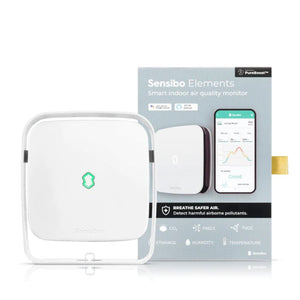
- Particulate and VOC readings drive filter changes on condition and give tenants something concrete during air quality conversations.
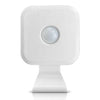
- Motion and door contacts catch the two most expensive habits in hospitality, conditioning an empty room and fighting an open balcony door.
- Current draw and runtime hours describe equipment health, and nothing else on this list does.
How Much Energy Do Faulty HVAC Sensors Waste?
Researchers simulated 3,600 cases of gradually developing sensor faults on a ten-zone office running ASHRAE Guideline 36 sequences, and site energy landed anywhere from 3.3% below the fault-free baseline to 18.1% above it. Berkeley Lab puts the broader figure for control faults and operating errors at 5% to 30% of commercial building energy use.
Drift rarely announces itself, which is exactly what makes it expensive. A sensor reading 2°F (1°C) high holds the room 2°F colder than the setpoint claims, every hour of every day, and the compliance report comes back clean.

In our own field work, placement causes more bad data than component failure does, though that's what we see and not a published finding. A wall sensor catching afternoon sun reads high all summer. A probe downstream of a supply diffuser reports supply air temperature and labels it the room. A battery sensor keeps sending its last good value for months after the cell dies. None of those trip an alarm.
Cross-checks catch the failures an individual sensor will never report about itself. Flag any channel that hasn't moved in 24 hours, because a frozen value looks healthy on every dashboard ever built. Then read your zone sensors against each other on a mild night with the equipment off, when adjacent spaces should drift toward each other and toward outdoor conditions. Any sensor still sitting apart from its neighbors by morning has a problem of its own.
What Can Remote HVAC Control Do That a Schedule Cannot?
Schedules cover the predictable stretch of the year, and the exceptions are where an HVAC monitoring and control system starts paying for itself. Somebody books a Saturday event and tells nobody, a tenant with a late deadline calls at 9 PM, and a technician bumps a setpoint during a service call and never puts it back.
Enforcement matters as much as the ability to change a setting. Setpoint ceilings and mode locks hold across hundreds of units without anyone policing them one thermostat at a time, and one rule change reaches a whole region when a heat wave arrives.
Remote reach has a revenue side as well, since the research compiled in a PNNL report for the Department of Energy puts 10% to 20% of commercial peak load in the category that can be curtailed temporarily for grid services, and a fleet of connected units becomes something a utility will write a check for.
How Much Does HVAC Fault Detection Save?
Operators furthest along with automated fault detection see median whole-building portfolio savings of 7%, according to the Department of Energy. The number sits below what most vendors imply, and the gap is easy to explain. An alert saves nothing on its own. The savings land when somebody closes the work order, so a detection layer bolted onto a maintenance team that's already underwater buys you a longer queue and the same energy bill.
Simultaneous heating and cooling in a single zone is the classic case, and it can run for years without anyone noticing. Short cycling belongs on the list too, since it costs compressor life more than kilowatt-hours. Runtime outliers between identical units carrying similar loads usually point to a mechanical problem or a drifting sensor. So does a unit that never reaches setpoint on a mild afternoon, or conditioning that keeps running two hours after the store locks up.
The temptation with a new IoT HVAC monitoring system is to switch on every available rule, which buries week one in alerts nobody can triage and kills engagement by week four. Start with three rules, give each a named owner, and add a fourth only after the first three have produced work orders somebody closed.
Trend data also gives you the before-and-after record that makes a savings claim defensible, and finance will come asking for it about six months after the efficiency spending goes through.
Which Protocol Fits Your HVAC Equipment?
The same EIA survey counts packaged air-conditioning units in 43% of commercial buildings and 58% of commercial floorspace, and much of the remaining stock runs on mini-splits, PTACs, and window units that take their orders from an infrared remote. None of that equipment has a terminal block waiting for a thermostat wire, which is why an IoT solution for HVAC has to meet the equipment where it stands and cannot assume a controls network already exists.

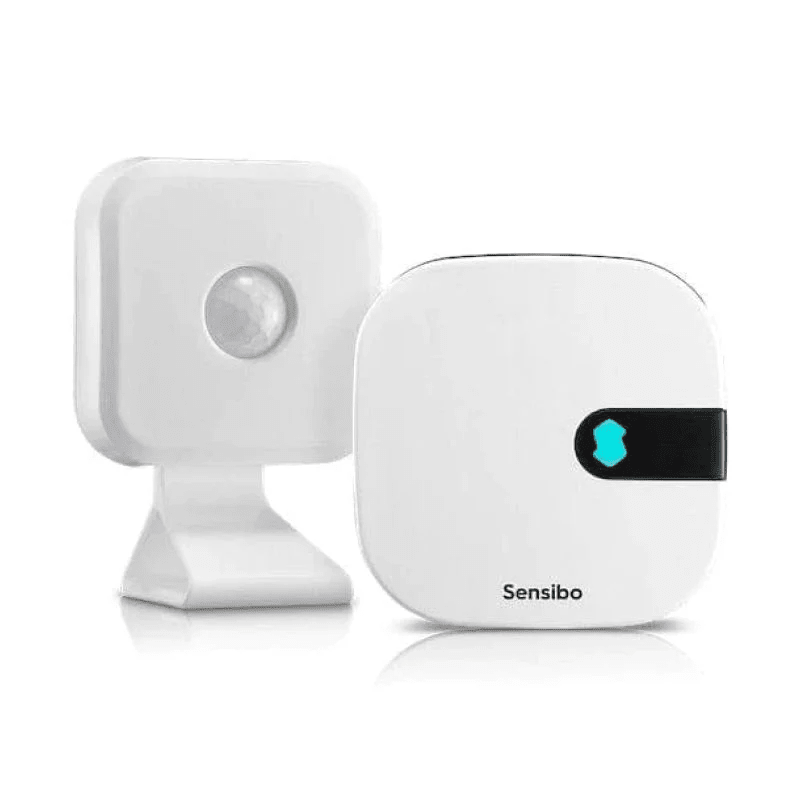
A built-up plant with a proper controller speaks BACnet, standardized as ASHRAE Standard 135, or Modbus, and reaching it is integrator work at an integrator's price. Everything driven by a handheld remote needs an infrared controller in the room with it. That second path has a limit worth planning around, since an IR controller talks one way and gets nothing back from the equipment, so only a sensor in the same room tells you the command landed. Battery sensors scattered across a campus where WiFi doesn't reach are a LoRaWAN problem, and a site with no usable building network at all needs cellular backhaul before anything else gets discussed.
The whole estate belongs on its own network segment. Connected controllers have no business sharing a VLAN with point of sale terminals or guest WiFi, and any platform your team logs into daily should support single sign-on. A shared password taped inside a cabinet door fails the first audit.
How Do You Stage an HVAC IoT Rollout?
Going portfolio-wide on day one is how an HVAC IoT program ends up with four hundred connected units and no agreed definition of what counts as a fault. Sequence beats speed.
- Inventory what you're connecting to. Brand, control type, and age for every unit takes a week to compile and prevents the order that shows up half-incompatible.
- Start with the zone that generates complaints. Whoever approves the budget already knows which one it is.
- Run one site through a full weather swing. Summer behavior tells you nothing about how the same logic performs in November.
- Fix naming conventions before scaling. Two hundred units called "Unit 4" across forty buildings is a problem that only gets harder.
- Expand by building type before geography, since a hotel floor and a warehouse office need different rules.
What Does Sensibo Airbend Do for Multi-Site HVAC?
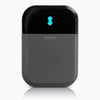
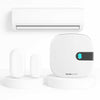
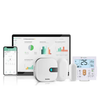
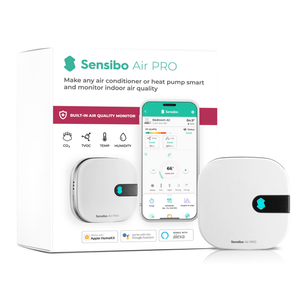
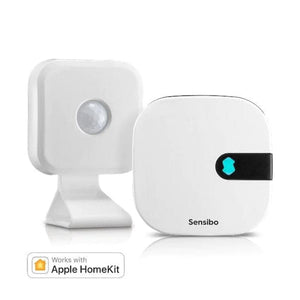
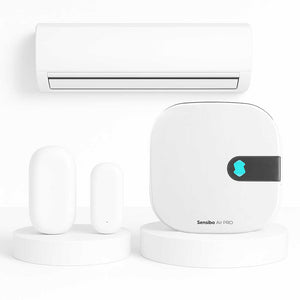
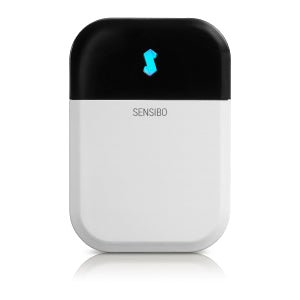
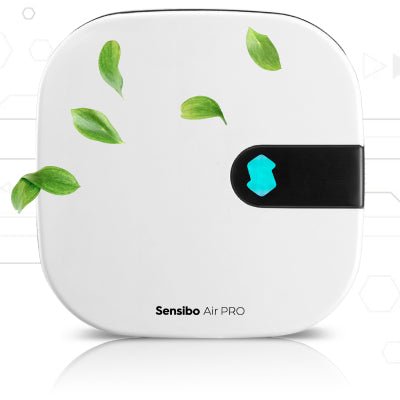
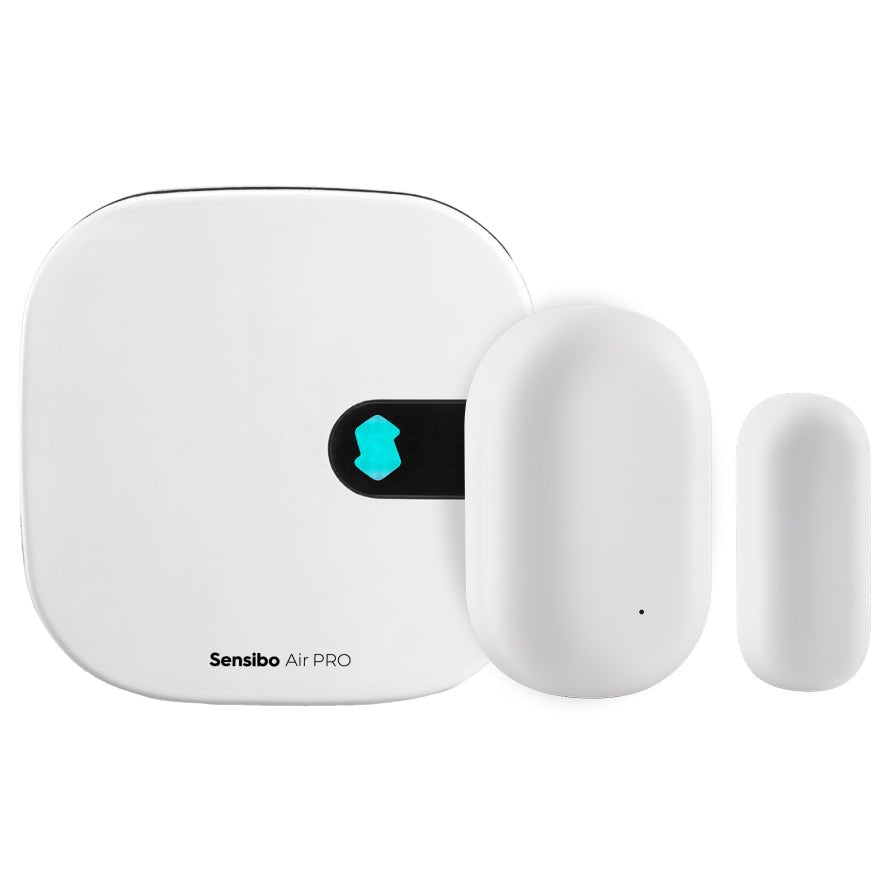
We built Sensibo Airbend for exactly that equipment, the split systems and PTACs a traditional controls contractor can't reach without replacing the unit. Controllers install in under a minute with no tools, work with more than 10,000 infrared-controlled models, and report into one console covering every site. Across the 400,000-plus devices running our platform, customers using occupancy logic and setpoint limits report energy reductions of up to 40%, a figure from our own customer data that hasn't been through a third-party audit. Open API access and SSO come standard.
FAQ
What happens to our schedules when a site loses internet?
Ask any vendor this before signing, because the answers differ sharply. Some controllers cache the active schedule locally and keep running it through an outage. Others hold whatever the unit was last told until somebody notices. Cloud rules that need live sensor input, occupancy shutoffs included, stop firing either way until the link returns.
How frequently should sensors report data?
Five to fifteen minutes suits temperature and humidity in most commercial spaces, and faster polling mainly costs battery life without changing any decision you'd make. Runtime and current draw can log at the same interval. Push the rate up only for equipment under active diagnosis, where one-minute data helps you catch short cycling in the act.
How many sensors does one zone need?
Start with one control point per unit, since that's the granularity the equipment already works at. A second sensor earns its place where the controller sits somewhere unrepresentative, near a doorway or above a copier, or where one unit serves spaces with opposite exposures, like a west-facing meeting room sharing a system with an interior corridor. Counting past two in a single zone usually means the zoning itself is wrong, and no amount of sensing fixes that.
Do we need to tell staff or tenants about occupancy sensors?
Passive infrared and door contacts don't identify individuals, though lease language and works council agreements may still require disclosure, and employment rules vary by jurisdiction. Telling people upfront costs nothing and keeps it from becoming a surveillance dispute six months in. Worth a call to counsel before the first sensor goes up.
Does adding smart controllers affect the manufacturer warranty on our AC units?
An infrared controller sends the same commands your handheld remote does and makes no physical or electrical change to the unit, so it rarely raises a warranty question at all. Hardwired integration into a control board is the case worth checking, along with any clause in your service contract covering third-party devices on the equipment. Get the answer from the manufacturer or your service provider in writing before a fleet-wide rollout, because a verbal assurance from a sales rep won't help you during a compressor claim.
Who owns the operating data if we switch platforms?
The export clause in the contract matters more than anything printed on the marketing page. You want historical trend data reachable through an API or a bulk export in a documented format, with a stated retention window and no exit fee. Ask for a sample export during the pilot, since a vendor who can't produce one in a week probably can't produce one at all.