




























Key Takeaways
- A retail network runs on mismatched HVAC equipment, local teams, and regional contractors, which makes consistent standards and cost control harder than at any single site.
- Air conditioning is one of the largest and most failure-prone parts of retail facilities management, and problems usually reach customers before the head office hears about them.
- One platform gives you live status on every unit, one-action temperature rules across the chain, early fault and energy alerts, and access scoped to each person's own stores.
- Most enterprise facility software was built for large commercial properties, so it fits a fast-moving retail chain badly, where the priorities are quick rollout, broad AC compatibility, and room to scale.
- We run this model with Sensibo Airbend for chains like 7-Eleven Hong Kong, which put more than 300 stores on one centralized HVAC system.
Running the facilities for one store is a job you can do with a clipboard and one good technician's number. Running fifty is a different animal. Retail facilities management across a chain means holding a pile of buildings to one standard when barely anything about them matches. The air conditioners went in across different decades. Store staff and outside contractors each do things their own way.
That gap between locations is where cost and inconsistency collect. A setpoint drifts in one store and nobody notices for a month. A unit fails quietly somewhere else. Because none of it lands on a single screen, it rarely gets caught while it is still cheap to fix.
All You Need to Know About Multi-Location Retail Facilities Management
- Running a Chain Changes the Facilities Job
- Why Air Conditioning Is the Costliest Part of Retail Facilities Management
- What Centralized HVAC Control Gives a Retail Team
- Enterprise Facility Management Software Versus What Retail Chains Need
- How Sensibo Airbend Manages AC Across Every Store
- 7-Eleven Hong Kong Put 300+ Stores on One HVAC System
- FAQ
Running a Chain Changes the Facilities Job

At a single location, the facilities job is small enough to hold in your head. You know the units, you know which one struggles in July, and you know who to call. Scale that to a chain and the knowledge scatters. Each store keeps its own quirks, and no one person carries the full picture anymore.
The equipment works against you on its own. A chain picks up air conditioners over years of openings, refits, and acquisitions, so a store from 2012 runs a different brand and generation than the one that opened last quarter. Retail property management at this scale is a single rulebook running into hardware that was never built to match.
People add another layer. Local staff set temperatures by feel. Regional contractors follow their own routines and their own pricing. What counts as comfortable, or as fixed, shifts from store to store, and the head office only learns about it when a bill or a complaint arrives.
From the street it all looks like one brand. Underneath, you are running dozens of separate operations that happen to share a logo. Multi-store management is mostly the work of dragging them back toward each other, and you cannot start until you can see them side by side.
Why Air Conditioning Is the Costliest Part of Retail Facilities Management

Heating and cooling carry one of the heaviest energy loads in any store. Space cooling alone runs to about 15% of the electricity a commercial building uses, and a shop that holds its doors open to the street all summer sits at the heavy end of that.
The bill is not even the worst part. AC breaks more than anything else you run, and it breaks loud. A compressor quits, the store is warm by mid-morning, staff are on the phone, shoppers are cutting their trips short, and now you are paying emergency rates for a callout. One dead unit runs up complaints and repair spend before anyone at head office knows a thing. Most of the fight is catching it earlier, and our complete guide to smart HVAC for retail stores is about buying that head start.
Then come the bills nobody flagged. A unit keeps cooling an empty stockroom overnight. Someone drops a setpoint to 65°F (18°C) during a heat wave and never resets it. A fan runs full against a propped-open loading door. None of it trips an alarm. It shows up weeks later as a line on an invoice, long after the money is gone. Catching that from a distance, one store at a time, is close to hopeless, and it is a big part of what day-to-day store operations management turns into at scale.
What Centralized HVAC Control Gives a Retail Team

Once every unit reports to the same place, the job stops being a scavenger hunt. You work the whole network from one screen instead of chasing stores one at a time. Four things get easy that used to be a pain.
- See the live status of every AC unit across all locations. Which units are on, what they are set to, how much power they are drawing, and which ones are behaving oddly right now.
- Push one temperature rule to the entire chain in a single action. A heat wave, a seasonal change, or a new company standard reaches every store at once instead of store by store over the phone.
- Get alerts before your customers do. Abnormal energy draw or an equipment fault triggers a notification while there is still time to act, rather than after a warm store has already lost an afternoon of trade.
- Give each person access to only their own stores. A regional manager sees their region, a contractor sees the one site they service, and neither one sees or touches the rest of the network.
Nobody wants to hand a contractor the keys to the whole estate so they can fix one rooftop unit. Decent retail facilities management software means you never have to.
Enterprise Facility Management Software Versus What Retail Chains Need
A lot of facility platforms were built for a different kind of building. Corporate real estate, hospitals, large single-site campuses with a wired building management system and an engineer on staff to run it. Drop that sort of tool onto a 200-store convenience chain and the fit is wrong from the start. The implementation drags, the hardware assumptions do not match, and every site would need someone who knows the system.
Retail runs on different constraints. Stores open and close, get bought and refitted, and the AC fleet is whatever each building came with. Retail property management across a chain like that pulls hard in the opposite direction from corporate real-estate software.
|
Enterprise facility platforms |
What a retail chain needs |
|
Months-long implementation per site |
Rollout across locations in days |
|
Built around a wired BMS or new equipment |
Works with existing AC of any brand or age |
|
Sized for one large or complex property |
Scales from 5 stores to 500 without switching platforms |
|
Assumes on-site technical staff |
Central control with nobody specialized at each store |
How Sensibo Airbend Manages AC Across Every Store
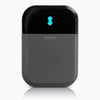
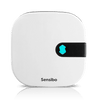
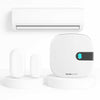
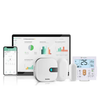
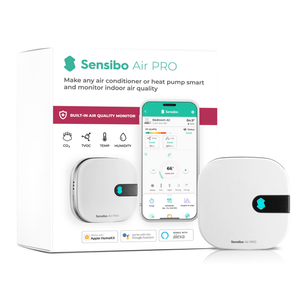
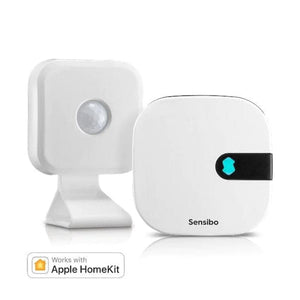
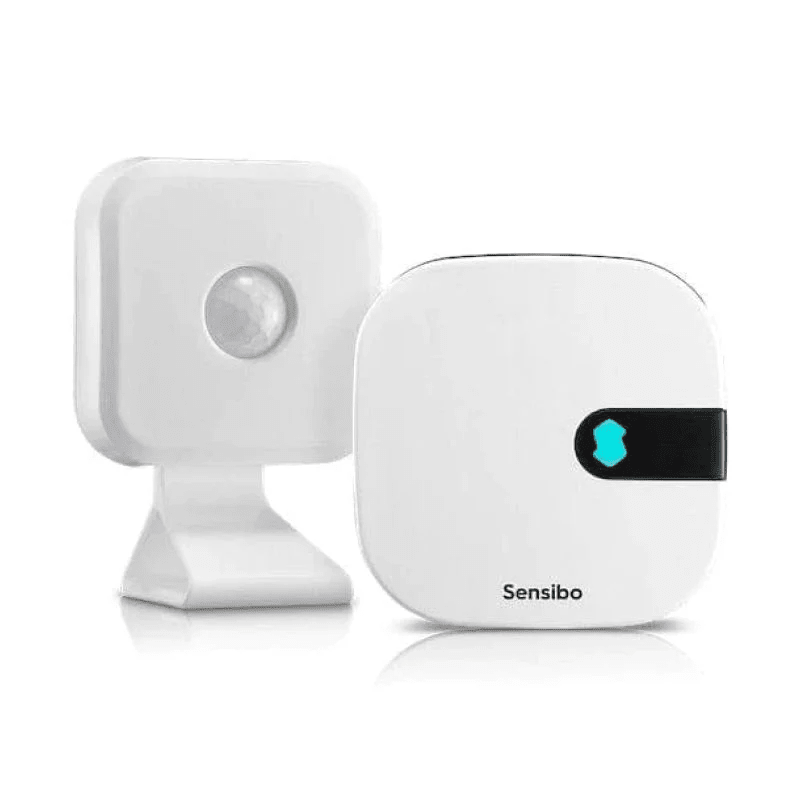
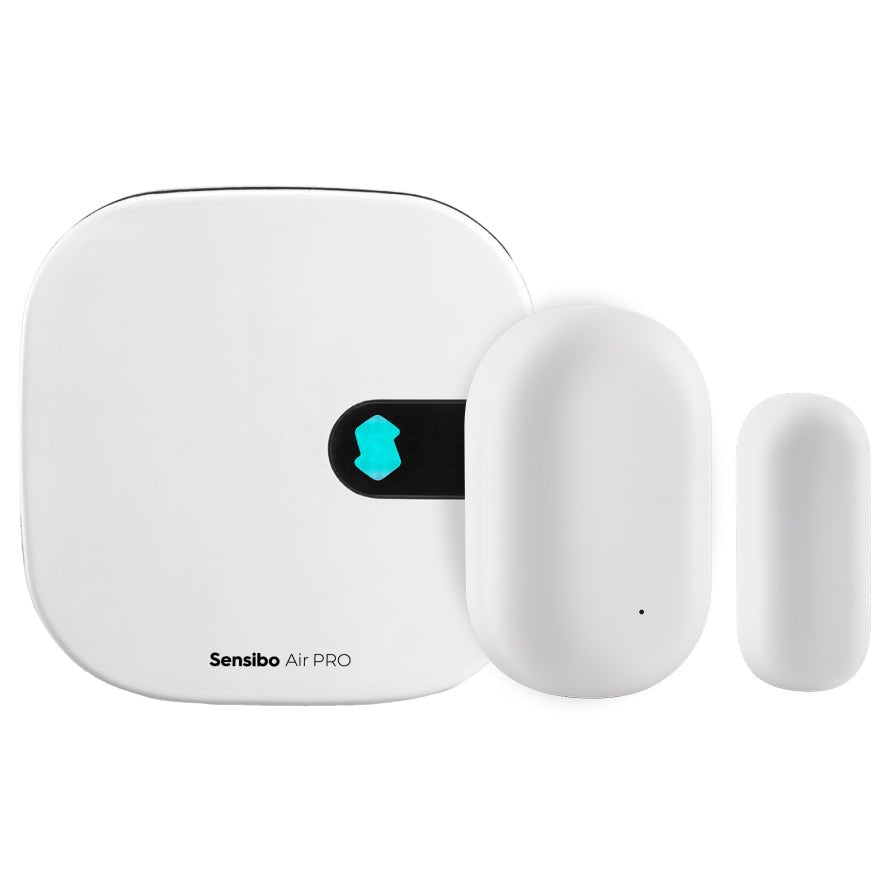
We built Sensibo Airbend as retail facilities management software for the chain case rather than the corporate campus. Each controller pairs to an air conditioner already in the store and reports into one dashboard, so a network of mismatched units behaves like a single system.
|
Feature |
What it does |
|
Unified dashboard |
Power use and temperature for every store at a glance, with control of one unit or many at once |
|
Map View |
Every location on one map, filtered by store, device status, or energy use |
|
Tags and Bulk Control |
Group stores by region or format, then push settings to the whole group in one move |
|
Customized Policies |
Hold each group to set temperature and operating rules automatically |
|
Role-based access |
Permissions by job, with each person limited to the stores they cover |
The hardware stays light. Airbend works with over 10,000 AC models on infrared remotes, each controller fits in about a minute with no rewiring, and there is no cap on how many stores, users, or devices you connect. We put the energy savings at up to 40%. It is all one system, the retail HVAC management platform for facility teams we hand every retail chain.
7-Eleven Hong Kong Put 300+ Stores on One HVAC System

7-Eleven runs hundreds of convenience stores across Hong Kong, and their air conditioning was a textbook mess. Outdated controls burning energy, no central system tying anything together, temperature and air quality drifting shop to shop, and corporate sustainability targets bearing down.
The chain brought us in alongside City FM Asia and moved its air conditioning onto Airbend. More than 300 stores came under centralized, remote control, with automation adjusting usage to real-time occupancy instead of running flat all day. City FM Asia handled regional deployment and support, which is what let the rollout cover a large footprint without rebuilding each site from scratch.
The results were the boring kind we like. AC energy use dropped across the chain, the in-store climate held steady from one outlet to the next, shoppers got a better environment, and maintenance sped up because the system flags trouble instead of waiting for someone to call it in. The full 7-Eleven Hong Kong case study has the detail.
None of this makes a chain tidy. The units stay mismatched, the teams stay local, the buildings stay weird. Store operations management at scale means moving the job of holding it together onto software that watches every store at once, so it stops living in one regional manager's head and car.
FAQ
Does Sensibo Airbend work with different AC brands and older units?
Yes. The only requirement is an infrared remote, which nearly every split, wall, and mini-split unit in retail already has, so a store from 2010 and one opened last year run side by side. Units with no IR remote, or ones already tied into a building automation system, are the exceptions.
How long does installation take, and does it interrupt trading?
About a minute per controller, with no rewiring, tools, or electrician. Stores go live during trading hours, so rolling out a whole network is a matter of weeks.
Can the platform scale as the chain grows?
Yes. There is no limit on how many stores you connect, so a new location only needs a controller paired to it, never a platform change.
Can I limit what a store manager or contractor can see?
Yes. Access is role-based, so each person sees only the stores they cover, a contractor gets the single site they service, and every change is logged.
What kind of alerts does the system send?
Abnormal energy use, equipment faults, poor air quality, and open doors or windows all trigger a notification, so you hear about a problem before a customer does.
Can I set the same temperature across the whole chain at once?
Yes. You can push a temperature or a full policy to the whole network, or to a tagged group of stores, in one action. A single store that needs something different can still be overridden on its own.