






































Key Takeaways
- Where most retail sustainability budgets go first, and the larger lever they skip.
- The three channels that turn a lower energy bill into balance-sheet value.
- Why climate control is the quickest emissions cut a store can make without capital spend.
- The four control moves that erase most wasted store energy.
- How per-store consumption data can write most of your reporting for you.
- What a first rollout looks like, and where to start it.
Most retailers open a sustainability push with recycled packaging, greener displays, or a public pledge. However, the larger figure comes from climate control. Heating and cooling run every hour a store stays open, and in most buildings they form the biggest line on the energy bill and the largest source of operational emissions a retailer can control.
Any serious plan for sustainability in the retail industry starts with that load before anything else. Smart climate control reaches it faster than any capital project, and it generates the data that reports, landlords, and investors keep asking for.
All You Need to Know About Sustainability in Retail
- What Does Sustainability in the Retail Industry Mean?
- Where Does Sustainability Pay Back for a Retail Business?
- Why Is Climate Control the Fastest Emissions Cut Without Capital Spend?
- Which Sustainable Practices in Retail Cut the Most Wasted Energy?
- How Does Automated Climate Data Feed Sustainability Reporting?
- Sensibo Airbend Across a Retail Network
- First Steps Toward a Measurable Climate Program
- FAQ
What Does Sustainability in the Retail Industry Mean?
Sustainability in retail means running stores in a way that cuts their environmental impact without hurting the business. It breaks into three sides.
- The environmental side is the energy, emissions, and waste from daily operations.
- The social side is fair sourcing and safe stores.
- Governance is the measuring and reporting that backs any of it up, so a pledge stands on numbers.
Packaging and sourcing is definitely important, but they touch a small slice of a store's footprint. Most of it comes from the day-to-day energy behind lighting, refrigeration, and climate control. Investors and auditors now read past the pledge to the meter behind it, so the store that can show its own measured numbers is the one taken seriously.
A statement with no measured data is a claim waiting to be checked. Recent retail sustainability trends have moved the conversation away from press releases and toward audited operational figures. Climate control produces those figures directly, which places it at the center of a retail industry's sustainability effort, well ahead of the recycled bags.

Where Does Sustainability Pay Back for a Retail Business?
The case for sustainability in the retail industry built around climate control pays back through three channels.
- Lower operating cost. Energy is one of the largest controllable costs in a store, and cutting consumption drops straight to the bottom line, month after month. On thin retail margins, a few points off the utility bill can outweigh a full point of sales growth. Because the saving repeats every billing cycle, it compounds across a network of stores and holds year after year.
- Stronger footing with landlords and investors. Both increasingly ask for energy and emissions data. Store-level figures feed asset valuations and green-lease terms, and they answer investor disclosure requests before the finance team has to chase every location for a reading. A store that can prove low, well-managed consumption also strengthens a case for building certification, which landlords increasingly price into rent and renewal.
- Customer loyalty. Havas' 2024 study found that 71% of people want brands to do more for society and the planet, with 63% trying to be environmentally responsible themselves. Retailers who act on that and can show the numbers build the kind of in-store customer experience that brings shoppers back.
A sustainability plan resting on these three channels needs no hardware overhaul. Each one rides on the same thing: measured, lower energy use.
Why Is Climate Control the Fastest Emissions Cut Without Capital Spend?

In most stores, heating and cooling carry the heaviest load on the meter, so small operating changes move real numbers. Solar arrays, envelope upgrades, and new rooftop units all take construction, permits, and a capital budget. Control changes take none of that.
The biggest single waste source is straightforward: systems running when nobody is in the store. A location might trade for twelve hours yet sit conditioned far longer, cooling empty aisles overnight, on early mornings before staff arrive, and through every closed Sunday and public holiday.
ENERGY STAR's retail guidance points to scheduling and setback for unoccupied hours as a first move. A smart controller applies that policy on its own, across every site, with no reliance on staff remembering to touch a thermostat. Fewer runtime hours do more than save power. They cut wear on compressors and fans, which stretches equipment life and trims service calls, so the same change that lowers emissions also lowers the maintenance bill.
Which Sustainable Practices in Retail Cut the Most Wasted Energy?
Four control moves account for most of the savings, and each targets a specific source of waste. Two work inside the store, and two work across the whole chain.
|
Control move |
What it removes |
|
Automatic after-hours shutdown |
Energy spent conditioning a closed, empty store overnight and on non-trading days |
|
Occupancy-based control |
Cooling and heating in stockrooms, back offices, and zones nobody is using |
|
Centralized monitoring |
Blind spots where one faulty or misconfigured store burns far more than its neighbors |
|
One network temperature policy |
Site-to-site drift that hides behind a chain's average and inflates the total |
Not all four contribute equally. After-hours shutdown usually delivers the biggest single cut, since a store stands closed and empty for more hours each week than it trades. Occupancy control adds the daytime savings, the stretches when a space is conditioned but standing idle.
The other two exist to protect those savings over time. Left alone, thermostat settings drift, a controller gets overridden by a manager on a hot afternoon, and the gains slip back within a season. Centralized monitoring is what keeps retail energy management honest across a chain, flagging a store that suddenly spikes so a manager can act on it the same week. A shared temperature policy locks every site to one target, so no single location can drift off and vanish into a network average.
How Does Automated Climate Data Feed Sustainability Reporting?
Reporting is where sustainability in the retail industry either survives scrutiny or falls apart. A smart climate platform records consumption for every store and region as it runs, which turns reporting from a manual chase into an export.
The same figures feed the documents a retailer already has to produce:
- Corporate reports, broken down by store and region.
- Disclosure and reporting standards that now expect Scope 1 and 2 energy and emissions numbers.
- Energy certification programs that require measured, ongoing data.
A chain filing retail ESG disclosures has to account for every store as its own line of energy and emissions data. Doing that by hand across a large estate can take weeks, and the result is often stale by the time it lands.
Timestamped, system-level records also withstand third-party assurance, which is really important as auditors and investors ask harder questions about how each figure was produced. The platform logs a per-store record instead, and the reporting team pulls what it needs, drawn from the same system that is cutting the consumption.
Sensibo Airbend Across a Retail Network
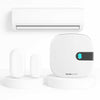
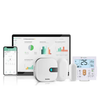
Sensibo Airbend applies these controls across a store network from one dashboard, and every number it shows is a live reading. It works with the air conditioners and heat pumps a chain already owns, since the controllers speak to existing units by infrared, so there is no building management system to install and no equipment to pull out.
For a chain with mixed or older units across its stores, that retrofit route avoids the cost and disruption of a full building-controls project, which is often what stalls a rollout in the first place. In our own deployments it has reached up to a 40% drop in energy use after a full rollout, with installation of about one minute per device, no store closures, and no rewiring.
Cutting energy use chain-wide is the operational core of sustainable retail, and the 7-Eleven Hong Kong case study is one good example.
We helped the chain, alongside its local partner City FM Asia, unify climate control across more than 300 of its stores on a single system, replacing the outdated per-store controls that were wasting energy and drifting out of sync.
Occupancy-based automation reduced AC consumption network-wide. In-store comfort evened out across locations, and maintenance ran faster once the platform flagged problems on its own.
First Steps Toward a Measurable Climate Program

A climate-focused approach to sustainability in the retail industry does not need a chain-wide rollout on day one. Four steps take a retailer to results that hold up.
1. Set a Baseline
Pull current consumption for a handful of representative stores, covering different sizes and climates. Without a starting number, no later saving can be proven and no report can stand on it. It also shows which stores are worth rolling out to first.
2. Kill the After-Hours Waste First
Apply automatic shutdown and setback for closed and non-trading hours across those stores. This is the single largest saving, and it needs no new hardware beyond the controllers, so the return shows up on the next bill. Many stores find this one change alone removes a large share of their climate-control energy, before any deeper tuning.
3. Standardize the Temperature Policy
Set one policy across the group so no location drifts warmer or cooler than the rest. This removes the variance a network average hides and makes every store's number comparable.
4. Wire the Data Into Reporting
Point the platform's per-store record straight at your reporting and disclosure documents, so the numbers arrive without manual collection and each figure traces back to a specific site.
Retailers ready to build this across a network can see how the pieces fit on Sensibo Airbend for retail, where climate control, savings, and reporting run from one system.
FAQ
How much of a store's energy does heating and cooling use?
In most stores, it is the largest single end use, ahead of lighting and general equipment. Food retailers with heavy refrigeration are the exception, and the exact share shifts with store type, climate, and trading hours.
Can a retailer cut HVAC energy without replacing any units?
Yes. Most of the fast savings come from control changes such as scheduling, setback, and occupancy response, which run on the existing air conditioner through a smart controller and need no capital spend.
How does smart climate data support sustainability reporting?
The controller records consumption per store and region as it happens, so those figures export straight into corporate reports and disclosure frameworks. Nobody has to collect readings location by location.
Does store temperature affect sales?
Comfort influences how long people stay and how they feel about a visit, so a stable, well-set temperature supports the shop floor. A sales floor that runs too hot or too cold tends to shorten visits.
How do retailers in leased spaces reduce HVAC energy?
Tenants usually control the in-store units even when the landlord runs the wider building, so scheduling and setback on those units still deliver savings. Shared initiatives with the landlord can open up more.
What is the payback period on smart HVAC controls?
It shifts with energy prices, store count, and how much waste exists today, though low hardware cost and fast operating savings tend to keep payback short. Baseline data from the first stores gives a firm estimate for the rest.