































An inverter AC is an air conditioner that uses a variable-frequency drive to adjust compressor speed based on cooling demand. Instead of cycling the compressor fully on and off to hold a set temperature, an inverter unit speeds up or slows down the motor continuously. This keeps the room closer to the target temperature while using less electricity than a fixed-speed system.
How an Inverter AC Works
The variable-frequency drive converts the incoming AC power to DC, then back to AC at whatever frequency the system needs at that moment. Changing the frequency changes compressor speed. When a room is far from the setpoint, the compressor runs at high speed to close the gap fast. Once the temperature gets close, it drops to a low speed and holds there, keeping the refrigerant moving at a reduced rate instead of shutting off entirely.
This steady operation avoids the large inrush currents that fixed-speed compressors draw every time they restart. Those startup spikes are the most energy-intensive part of a cooling cycle. A 2020 study published in SpringerLink, comparing identical-capacity units (18,000 BTU) over 108 days in Saudi Arabia, measured 44% lower electricity consumption for the inverter model. Most industry sources place the typical savings range at 30 to 50%, depending on climate, insulation, and how many hours the unit runs per day.
The coefficient of performance (COP) of an inverter AC also holds up better at partial loads, where fixed-speed units lose efficiency through repeated on-off cycling. Efficiency ratings like SEER and SEER2 already account for partial-load performance, which is one reason inverter models score higher on those scales.
Inverter vs. Fixed-Speed AC
Feature |
Inverter AC |
Fixed-Speed AC |
Compressor operation |
Variable speed, runs continuously |
Full speed on/off cycling |
Temperature stability |
±0.5°C typical variance |
±2°C or more variance |
Noise level |
38–45 dB(A) at low speed |
48–55 dB(A) during operation |
Energy use |
30–50% lower over a full season |
Higher due to startup surges |
Upfront cost |
20–30% more expensive |
Lower purchase price |
Payback period |
Typically 2–3 years of regular use |
N/A |
Fixed-speed units still make financial sense for spaces that run cooling only a few hours per day, where the energy savings from inverter technology take much longer to offset the higher price.
Smart Control on Inverter Units
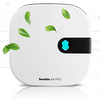
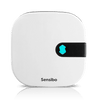
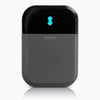
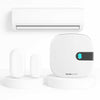
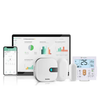
Most inverter mini-splits and heat pumps ship with an infrared remote and no connectivity. A smart controller adds WiFi-based scheduling, usage tracking, and geofencing to any IR-controlled inverter AC without replacing the unit. See How to Make Your AC Smart for a full setup walkthrough.