





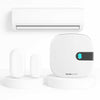

































A mini-split is a ductless heating and cooling system with an outdoor compressor/condenser connected to one or more indoor air-handling units through a small conduit (typically a 3-inch wall penetration carrying refrigerant lines, power cable, and condensate drain). Each indoor unit serves a single room or zone, delivering conditioned air directly into the space with no ductwork in between.
Most mini-splits are heat pumps, meaning they both cool and heat by reversing the refrigerant cycle. Cooling-only models exist but represent a shrinking share of the market.
Why Mini-Splits Rate Higher Than Ducted Systems
Two factors drive the efficiency gap. The first is zero duct loss: central ducted systems lose 20-30% of conditioned air through leaky or uninsulated ductwork before it reaches the room. Mini-splits skip that entirely.
The second is inverter compressor technology. A conventional ducted AC runs its compressor at full speed, cycles off when the thermostat is satisfied, then blasts back on. A mini-split inverter compressor ramps up and down continuously to match the room's load, avoiding the energy spike of constant on/off cycling. This is the major advantage of mini-split systems and the primary reason single-zone units reach SEER2 ratings above 30 while most ducted splits top out in the low-to-mid 20s.
Four Indoor Units and Where Each One Belongs
Type |
Mounting |
Visibility |
Best For |
High-wall |
Mounted near the ceiling on the interior wall |
Visible |
Bedrooms, living rooms, offices |
Ceiling cassette |
Recessed into the drop ceiling, only the grille is visible |
Low profile |
Commercial spaces, finished basements |
Floor-standing |
Sits at floor level against a wall |
Visible |
Rooms with limited wall space, attic conversions |
Concealed duct |
Hidden above the ceiling with short duct runs to grilles |
Invisible |
Homes where visible units are unacceptable |
High-wall units account for the majority of residential installations. Concealed duct models sacrifice some efficiency (they reintroduce short duct runs) but eliminate the aesthetic objection that keeps some homeowners from choosing ductless.
What Mini-Splits Don't Do Well
Mini-splits use washable mesh filters with lower MERV ratings than the pleated filters in ducted systems. The U.S. Department of Energy notes this as a trade-off, stating that a separate air purifier may be necessary if finer particulate filtration is desired.
Oversizing is as damaging with mini-splits as with central systems. An oversized unit satisfies the setpoint too quickly, short-cycles, and never runs long enough to dehumidify properly, leaving the room cool but clammy.
Selecting the right capacity and model for the space matters more than brand reputation. A comparison of the best ductless mini-split air conditioners breaks down current models by efficiency, heating range, and noise levels.