

































A non-programmable thermostat holds one temperature setpoint until someone physically changes it. There is no schedule, no automation, and no remote access. You turn the dial or press a button, the system heats or cools to that number, and it stays there until the next person walks up and adjusts it.
These are the oldest and simplest type of thermostat still in common use. Millions remain installed in homes, rental units, and small commercial spaces where the original builder chose the cheapest option or where tenants aren't allowed to swap hardware.
How a Non-Programmable Thermostat Works
The device reads room temperature through a bimetallic strip (in older mechanical models) or an electronic thermistor (in newer digital ones). When the reading drifts below or above the single setpoint, it signals the HVAC system to kick on. Once the room hits the target, the system cycles off.
Mechanical models use a mercury switch or snap-action contact. Digital models use a relay, but the logic is the same: one target, on or off, no time-based changes.
Feature |
Mechanical (Dial) |
Digital (Button) |
Temperature accuracy |
±3–5°F |
±1°F |
Calibration drift over time |
Common |
Rare |
Batteries required |
No |
Yes (usually AA or AAA) |
Display |
None or analog needle |
LCD screen with current and set temp |
Where Non-Programmable Thermostats Still Make Sense
They cost $15–40 and install in under ten minutes. For vacation cabins, storage units, or spaces where the temperature rarely needs to change, a non-programmable thermostat does the job without extra complexity. Some property managers prefer them in rentals because tenants can't accidentally lock themselves out of a schedule they don't understand.
The trade-off is energy waste. The system runs at the same intensity at 3 a.m. as it does at 6 p.m., with no setback during empty hours. The U.S. Department of Energy's 10% savings estimate for scheduled temperature setbacks assumes a programmable or smart thermostat is doing the work. A non-programmable unit can't capture those savings unless someone remembers to adjust it manually every time they leave and return. That gap between manual and automated control is the main reason homeowners weigh smart AC controllers against traditional thermostats when looking to cut energy bills.
Upgrading From a Non-Programmable Thermostat
Replacing the unit with a programmable or smart thermostat is the standard upgrade path for ducted HVAC systems. The wiring is usually compatible, and most swaps take under 30 minutes.
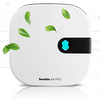
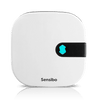
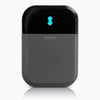
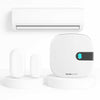
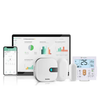
Ductless mini-splits and window units don't connect to wall thermostats at all; they rely on infrared remotes. For those systems, a smart AC controller adds scheduling, geofencing, and app control without touching the unit itself.