


































A programmable thermostat is a temperature control device that follows a user-set schedule to adjust heating and cooling output throughout the day. Instead of requiring manual changes each time you leave or return home, the thermostat raises or lowers the target temperature at preset times. It runs the system less while you sleep or while the house sits empty, then brings it back to a comfortable range before you walk through the door.
How a Programmable Thermostat Works
The device connects to a central HVAC system through low-voltage wiring (typically a 24V C-wire circuit). Once wired in, it reads the current room temperature from an internal sensor, compares it against the scheduled setpoint for that time block, and sends a signal to the furnace, air conditioner, or heat pump to cycle on or off.
The U.S. Department of Energy estimates that setting the thermostat back 7–10°F from its normal setting for eight hours a day can cut annual heating and cooling costs by roughly 10%. The catch: those savings only materialize if the schedule matches real occupancy patterns. A program nobody updates after installation wastes the same energy as no program at all.
Common Schedule Types
Type |
Schedule Structure |
Typical Use Case |
7-day |
Different program for each day |
Households with irregular routines |
5+2 |
One program for weekdays, another for weekends |
Standard Monday–Friday work schedules |
5+1+1 |
Weekday program + separate Saturday and Sunday |
Weekend schedules that differ by day |
1-week |
Same program every day |
Consistent daily routines, rental properties |
Most units offer two to four time blocks per day (wake, leave, return, sleep), with independent temperature targets for each.
Programmable vs. Smart Thermostats
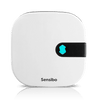
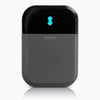
A programmable thermostat runs on fixed schedules. A smart thermostat adds WiFi, occupancy sensing, and learning algorithms that adjust on the fly based on behavior, weather forecasts, and energy pricing. The differences between smart AC controllers and traditional thermostats go well beyond connectivity; they change how much control you have over comfort and cost.
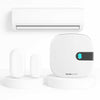
The gap between the two categories matters most for ductless mini-splits and window units. These systems ship with infrared remotes and no wiring for a wall thermostat of any kind. A retrofit smart AC controller bridges that gap, adding scheduling, geofencing, and remote access to equipment that a standard programmable thermostat can't physically connect to.
Do Programmable Thermostats Save Energy?
On paper, yes. The scheduled setbacks reduce runtime during unoccupied hours. Studies from the National Renewable Energy Laboratory, however, found that many households override the schedule so frequently that projected savings never show up on the bill. Automation that responds to occupancy and usage patterns, rather than relying on a static program, tends to produce more consistent results. That gap is a core reason smart thermostats save energy where programmable ones often fall short.