


































Key Takeaways
- Five ordinary operating decisions produce most of your HVAC overspend, and your stores repeat all five every day.
- The waste is invisible at store level. One unit running overnight looks like nothing until you multiply it by 300 stores and a full year of nights.
- Adding headcount raises your cost of watching stores in direct proportion to store count, and buys no improvement in response speed.
- Benchmarking your stores against each other turns a flat utility total into a ranked list of who to call first.
- EPA data covering 2008 to 2011 put consistent benchmarkers at 7% lower energy use over three years, with below-average sites returning roughly double what above-average ones did.
You code HVAC to facilities. Something breaks, someone calls a contractor, the invoice lands in a maintenance bucket. Then the utility bill arrives and nobody on your team can tell you why it moved.
The Department of Energy's Pacific Northwest National Laboratory puts 10% to 30% of the energy used in commercial buildings in the waste column because of improper and inefficient operations. That covers commercial buildings of every kind, and your stores have no building engineer on site, which is no reason to think they do better. The equipment works. What drifted is everything around it.
Which makes this a retail operations management problem before it's a maintenance one. The units are already on your walls and they can hold a schedule and a setpoint. Nobody is telling them to.
All You Need to Know About Retail Operations Management
- Retail Operations Management Sets the HVAC Bill
- Five Daily Decisions That Drive Store HVAC Costs
- Why Store Operations Management Can't Staff Its Way Out
- What Retail Energy Management Looks Like After Central Control
- Benchmark Every Store Against Every Other Store
- Rollout Without Closing a Store
- What Central Control Won't Fix
- FAQ
Retail Operations Management Sets the HVAC Bill
Facilities owns the box. You own what happens to it between open and close, and that's where the money goes.
Count who touches a thermostat in one of your stores this week. A closing associate, an opener, a shift lead who was cold, a merchandiser who propped a door to move pallets. Every one of those choices is reasonable on its own. None gets recorded anywhere, and nobody's bonus moves because of them.
Your district manager's walk covers planogram compliance, safety checks, and stock accuracy. We have yet to see a chain where temperature sits on that form. Equipment condition has an owner, a budget, and a contractor on call, which is retail facilities management doing its job properly. The behavior around that equipment has nobody, and store operations management is the only function close enough to it to notice.
Your other losses announce themselves. Shrink shows up in a count, a bad schedule shows up in labor reporting. A store cooling an empty stockroom through August shows up as one blended number six weeks later, mixed in with 299 others.
Five Daily Decisions That Drive Store HVAC Costs

Five operating decisions account for most of the avoidable HVAC spend in a retail chain. Cooling that keeps running after close, setpoints that differ from store to store, full-power cooling before opening hours, no response when doors stand open, and no way to move your whole network into an energy-saving mode during a heat wave.
AC Runs After the Store Closes
Your stores keep cooling for hours after the last customer leaves, because the closing checklist ends at cash, doors, lights and alarm. The AC is either missing from that list or on it in a form nobody can verify, which comes to the same thing.
PNNL's building operations work treats after-hours running as one of the costliest habits a building picks up. A closed store is the extreme version, because the occupancy you're conditioning for is zero. Weekends and holidays compound it, since the schedule programmed at install has been running ever since.
Why Does Every Store Run a Different Temperature?
Because your staff adjust to their own comfort and nothing resets it afterwards. You set a standard, then store 114 runs colder because a cashier stands under a supply vent, store 230 runs warmer because its manager is careful with money, and neither one knows what the other is doing. The spread is the expense. A two-degree gap across a few hundred locations adds up to a number you can't price, because you can't see the distribution.
The Pre-Opening Pull-Down at Full Power
Your heaviest load of the day often lands in the one window with no customers in it. Openers arrive to a warm building and push the unit to maximum, on the theory that a colder setting pulls the space down faster.
On an older fixed-speed unit it doesn't, because the compressor has one output and it's already using it. On the inverter mini-splits most chains now run, it does, and that's the part that costs you. The unit ramps to its highest output to close a gap your opener invented, which sets your morning peak before a customer has walked in, then overshoots the temperature anyone needed and gets nudged back an hour later.
Nobody Responds to an Open Door
An open door hands the outdoors a direct path onto your sales floor, and nothing in your system raises a flag. Storefronts get held open to pull foot traffic, loading doors get propped for a delivery and stay propped. Full-scale measurement in a commercial store during the cooling season found the infiltration rate with the door open ran about 21.3 times the closed-door rate, and the room sat roughly 9°F (5°C) above a 75°F (24°C) setpoint.
You won't get a complaint about this one — the unit just works harder for as long as the door stays open, so the store feels worse and costs more at once.

A Heat Wave Hits and the Setpoints Don't Move
Every location you run hits peak load in the same week, and the grid does the same thing. During the June 2025 eastern heat wave, real-time wholesale prices in PJM reached $1,334 per megawatthour against $52 the week before, while ISO New England hit $1,110 against $65.
You probably don't buy at real-time wholesale, so that spike doesn't reach your invoice directly. What does reach it depends on your tariffs, and this is worth checking site by site before you decide what a fast setback is worth. Larger stores usually pay a demand charge set by the highest usage interval in the billing period, commonly 15 or 30 minutes, where a chain-wide cooling peak is a strong candidate to set the month's number. Plenty of your small-format sites will sit on tariffs with no demand charge at all and pay only for the extra kilowatt-hours, a smaller bill that runs for as many days as the heat does.
Either way, a network-wide setback is worth most on the exact days it's hardest for you to deploy by phone.
Why Store Operations Management Can't Staff Its Way Out
Watching stores by hand costs you more with every location you add, and never gets faster. Say verifying one store takes ten minutes a day, covering setpoint, schedule integrity, mode, and a scan for units running with nobody in the space. That's generous for a careful person.
|
Stores |
Daily verification hours |
Full-time equivalents |
|
50 |
8.3 |
1 |
|
200 |
33.3 |
4 |
|
500 |
83.3 |
10 |
You won't hire ten people to check thermostats — that's the problem rather than your way out of it. The work lands on district managers whose weeks are already full, so it competes with store visits and sales coaching instead of appearing as a line somebody has to approve. Priced against the $116,890 mean annual wage BLS reports for facilities managers, ten full-time equivalents would run past a million a year. What you do spend is that much attention pulled off something else, and it buys detection only. Correcting what those checks turn up is a separate round of calls to store managers with customers waiting.
Our software costs scale too, and we won't pretend otherwise. A controller per unit is a real per-store line on your invoice. What stops scaling is the person reading the output, because one of your people can hold policy across 500 stores on a dashboard and across roughly a dozen by phone.
Speed is where headcount breaks outright. No amount of hiring gets 500 setpoints changed inside the hour a heat wave gives you, because the constraint is how many simultaneous calls a person can make. That ceiling doesn't move with budget.
What Retail Energy Management Looks Like After Central Control

What changes for you is where the decision lives, and it moves retail operations management from chasing stores to setting policy once. Today your policy is a document and compliance is a hope. Afterwards the policy is a setting, and compliance is what happens unless somebody deliberately overrides it.
Four parts of your operating rhythm change.
- Your temperature policy stops being circulated and starts being applied. One action reaches a region or the whole chain.
- Schedules follow each store's trading hours, holiday calendar included, without anyone remembering to adjust them.
- Exceptions reach you the day they happen rather than in a monthly invoice. An open door, a store outside its band, a unit drawing more than its neighbors.
- Your regional managers see only their own stores, so more visibility doesn't hand you a governance problem.
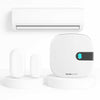
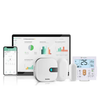
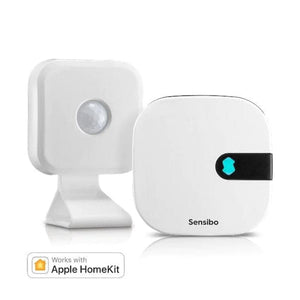
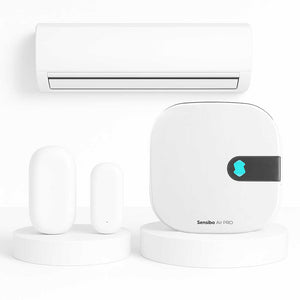
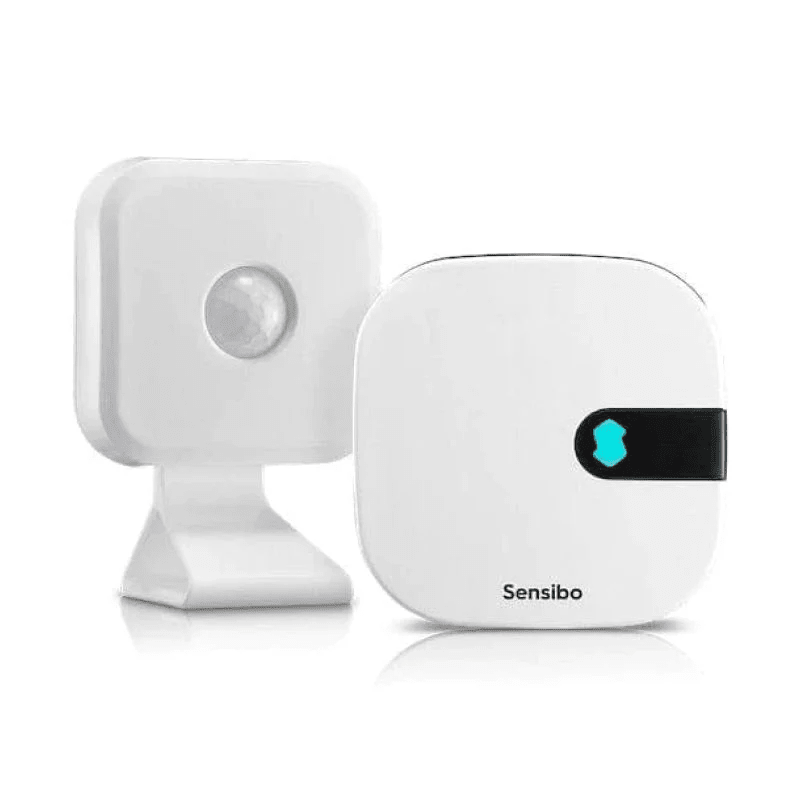
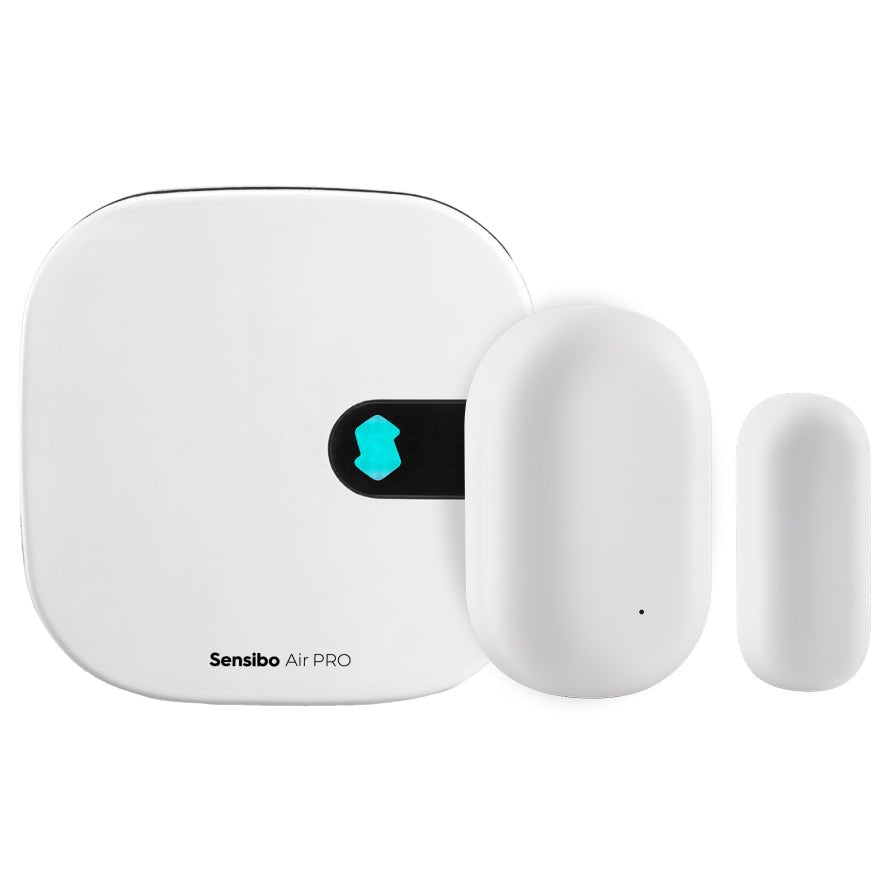
We built Sensibo Airbend for retail chains to be that layer. As a retail energy management solution it sits on the air conditioners you already own and puts your whole portfolio on one screen, with our own figure for the savings at up to 30% on AC energy.
Benchmark Every Store Against Every Other Store
Once your consumption data lands in one place, the most useful thing it does is rank. Your chain total tells you nothing about where to act. A sorted list tells you who to call.
EPA's analysis of more than 35,000 buildings that benchmarked through Portfolio Manager between 2008 and 2011 found average savings of 2.4% a year and 7% across the three years, with buildings starting below average saving roughly twice what better performers did. Retail beat that average.
Their worked example for a medium-box retailer with 500 stores came to $2.5 million in cumulative energy cost savings, which they equated to lifting sales by 0.89%. Divide it out and that's about $5,000 per store over three years from benchmarking discipline alone, before any control layer touches a unit. Those are 2012 dollars, so the ratio travels better than the figure.
Raw kilowatt-hours won't get you there. Your flagship with a glass frontage in Phoenix and your small format in Portland post totals that look nothing alike for reasons that have nothing to do with waste. Four adjustments have to happen before any two of your stores can be compared at all.
|
Normalize for |
Why the raw number lies without it |
|
Floor size |
A 40,000 sq ft flagship outconsumes a 2,000 sq ft mall unit every month of the year, and neither total tells you which one wastes more |
|
Trading hours |
A 24-hour store runs roughly double the HVAC hours of one on mall hours before a single unit misbehaves |
|
Local weather |
Phoenix and Portland don't share a cooling season, so identical equipment posts different numbers for reasons nobody controls |
|
Store format |
Grocery carries a refrigeration load that apparel doesn't, and it lands on the same meter |
That's the logic behind the ENERGY STAR score for retail stores, where the score adjusts for climate and business activity before rating anything. Getting your own meter data into that shape is most of the work in retail energy management across a portfolio, and it's the step chains skip when they export everything to a spreadsheet and give up.
Normalized, your outliers stop hiding. The cause is nearly always one of the five decisions above, which means your fix is a conversation and a setting rather than a capital request. That's what turns multi-store management of energy into a weekly routine instead of an annual project.
Rollout Without Closing a Store

No store closes for this. Each controller mounts near the existing AC unit, plugs into a standard outlet, and pairs through infrared detection, which runs about a minute per device and one to two hours for a whole store. Your stores stay open through it.
The requirement is an infrared remote. That covers split systems, mini-splits, PTACs and window units, and it rules out hardwired rooftop units running on 24V thermostats with no IR interface. Most US chains have both, so the honest answer is that our retail energy management solution takes the IR-controlled part of your fleet and runs alongside whatever building system holds the rest.
Most chains your size hand the physical rollout to a facilities partner. In the 7-Eleven Hong Kong deployment, more than 300 stores and 1,200 units came online with City FM Asia handling regional deployment, each site joining the same dashboard as it connected.
What Central Control Won't Fix
You should know the edges before you pitch this internally, because somebody in the room will find them.
A unit sized wrong for the space still short-cycles. A compressor near the end of its life still fails in August. A store with single-glazed frontage still loses more than the one next door. None of that is a scheduling problem and no dashboard will make it one.
What schedules and setpoint policy take back is the waste that exists because nobody was watching. That happens to be your largest and cheapest piece, which is why it's worth doing first, and the rest stays a capital and maintenance conversation you were always going to have. If you want to see the control layer against a chain the size of yours, that's what Airbend for Retail is for.
FAQ
Should operations or facilities own store HVAC costs?
Split it. Equipment condition and the budget that keeps it running sit with facilities. Setpoint policy, schedule compliance, and reaction time belong to retail operations management, which makes them yours. Give away both halves and the behavioral one goes unmanaged.
How do we hold a chain-wide temperature policy without a wave of store complaints?
Set a band rather than a fixed number, and let local overrides expire on their own. ASHRAE's thermal comfort standard does not mandate operating setpoints because clothing and activity levels vary too much between buildings, so your band has to come from your own store data.
What happens in leased stores where the landlord controls the HVAC?
If the unit takes an infrared remote and the store pays its own electricity, a controller works no matter who owns the equipment. Where the landlord runs a central plant and bills a service charge, it's a lease conversation rather than a technical one.
How quickly do savings appear after rollout?
Scheduling corrections show up on your first full billing cycle, since off-hours runtime stops the day a schedule goes live. Setpoint standardization takes a season to read cleanly, because weather variation between months masks it until your comparisons are normalized.
Which stores should go first?
Your highest-consumption locations, not a representative sample. EPA's benchmarking data shows sites starting below the median return about twice the savings of those starting above it, so a pilot built from typical stores understates what your rollout will do.