
































A thermostat is a device that monitors room temperature and signals heating or cooling equipment to turn on or off in order to maintain a chosen setpoint. In a central HVAC system, the thermostat connects to the furnace, air conditioner, or heat pump through low-voltage wiring (typically 24V) and acts as the primary user interface for the entire system.
How a Thermostat Works
The thermostat's temperature sensor reads the ambient air near the device. When the reading drifts beyond the setpoint by a preset margin (called the temperature differential or swing), the thermostat closes a relay that activates the connected equipment. Once the room returns to the target range, the relay opens and the equipment shuts off. Older mechanical models used a bimetallic coil that physically bent with temperature changes to trip a mercury switch. Current models use electronic thermistors and solid-state relays, which respond faster and hold tighter accuracy, usually within ±1°F.
Types of Thermostats
Type |
How It Operates |
Typical Price Range |
Non-programmable |
Manual setpoint only. No scheduling. The temperature stays where you set it until you change it again. |
$20–50 |
Programmable |
Stores a schedule (daily or weekly) and adjusts the setpoint automatically at set times. |
$30–80 |
Smart |
Connects to WiFi. Adds app control, learning algorithms, occupancy sensing, geofencing, and energy usage reports. |
$100–300 |
Smart thermostats cut heating and cooling costs through features that programmable models lack, including automatic adjustments based on occupancy and weather forecasts. The mechanics of how smart thermostats save energy come down to eliminating the runtime that serves an empty room.
Wired Thermostats vs. Ductless Remotes
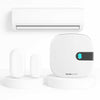
Traditional thermostats control ducted HVAC systems through hardwired connections. Ductless mini-splits and window units do not use a thermostat at all. They ship with an infrared remote that communicates line-of-sight with a receiver on the indoor unit. That remote handles basic functions like temperature, fan speed, and mode, but lacks scheduling, automation, or energy tracking.
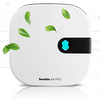
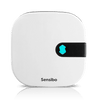
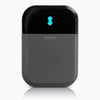
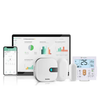
A smart controller bridges this gap by adding WiFi connectivity, scheduling, and occupancy-based automation to any IR-controlled unit. The benefits that smart thermostats bring to comfort and cost apply to smart controllers on ductless systems in the same way.