





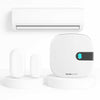


































A VRF system is a commercial HVAC technology that connects multiple indoor units to a single outdoor unit and controls the flow of refrigerant to each zone independently. Instead of distributing conditioned air through ductwork, a VRF system sends refrigerant directly to wall-mounted, ceiling-cassette, or ducted indoor units through copper piping. Each zone has its own thermostat, so one floor can cool a sun-exposed conference room while heating an interior office at the same time.
How VRF Differs from Conventional Systems
A conventional ducted system conditions air at a central air handler and pushes it through ducts to every room. A VAV (variable air volume) system adds dampers to adjust airflow per zone, but all zones receive air at the same temperature. A VRF system bypasses ductwork entirely for most zones and varies the amount and temperature of refrigerant reaching each indoor unit.
Feature |
Conventional Ducted / VAV |
VRF |
Distribution medium |
Conditioned air through ducts |
Refrigerant through copper piping |
Zone independence |
Limited (shared air temperature) |
Full (each indoor unit is independent) |
Simultaneous heating and cooling |
Not possible without reheat or separate systems |
Standard on 3-pipe heat recovery models |
Indoor unit count per outdoor unit |
Typically one air handler |
Up to 50 or more |
Ductwork required |
Extensive |
Minimal or none |
The inverter-driven compressor in a VRF outdoor unit adjusts speed continuously to match the combined demand of all connected zones. At partial load, which is the normal state for most of the operating day, this uses far less energy than cycling a full-size compressor on and off.
Heat Pump vs. Heat Recovery VRF
Two-pipe heat pump VRF systems can heat or cool all zones at once but cannot do both simultaneously. Three-pipe heat recovery systems add a branch controller (refnet joint or BS box) that redirects refrigerant so some zones receive heating while others receive cooling during the same cycle. The recovered heat from cooling zones offsets the energy needed for heating zones, which is why heat recovery VRF shows the largest efficiency advantage in buildings with mixed loads, such as a hotel with sun-exposed south-facing rooms and shaded north-facing rooms.
Where VRF Fits
VRF dominates mid-size commercial buildings in Asia and Europe and has gained traction in North American office buildings, hotels, schools, and multifamily projects over the past decade. The technology scales well in buildings that need many individually controlled zones but lack the ceiling space or shaft access for large duct runs. Initial cost runs higher than conventional split systems, and installation requires technicians certified in brazing and refrigerant piping, which limits the contractor pool in some markets.